
A roof on acreage needs a roofer who can find the house, get equipment to it and leave the land safe for the animals afterwards. For roof repair in Southwest Ranches, One Call Home Pros finds you a roofing professional who is vetted, licensed and insured, and briefs them on the property before they set out. One Call itself is not a roofing contractor and carries no roofing licence. The roofer inspects and repairs; we set the job up, check the pro and stay on it until it is closed.

Why Southwest Ranches homes need roof repair planned around the land
Southwest Ranches is rural by design. Lots are measured in acres rather than feet, many properties keep horses, and a large share of homes run on private wells and septic systems rather than shared mains. There is almost no shared infrastructure to lean on. Each property is its own small estate, and the houses on them tend to be large, with big roofs and often several buildings.
For roofing, three things follow. Drives between properties are longer, so a roofer plans the day around getting to you. Roofs are bigger, with more slopes, valleys and edges to check, and more than one structure may need attention after a storm. And the work happens on land where animals graze and septic fields lie under the lawn, so where the ladder stands and where the debris falls matter more than they would on a suburban lot.
Roof work we arrange in Southwest Ranches
Leaks in the main house
Water through a ceiling or a wall in heavy rain, traced from the stain back to its entry point on a large roof.
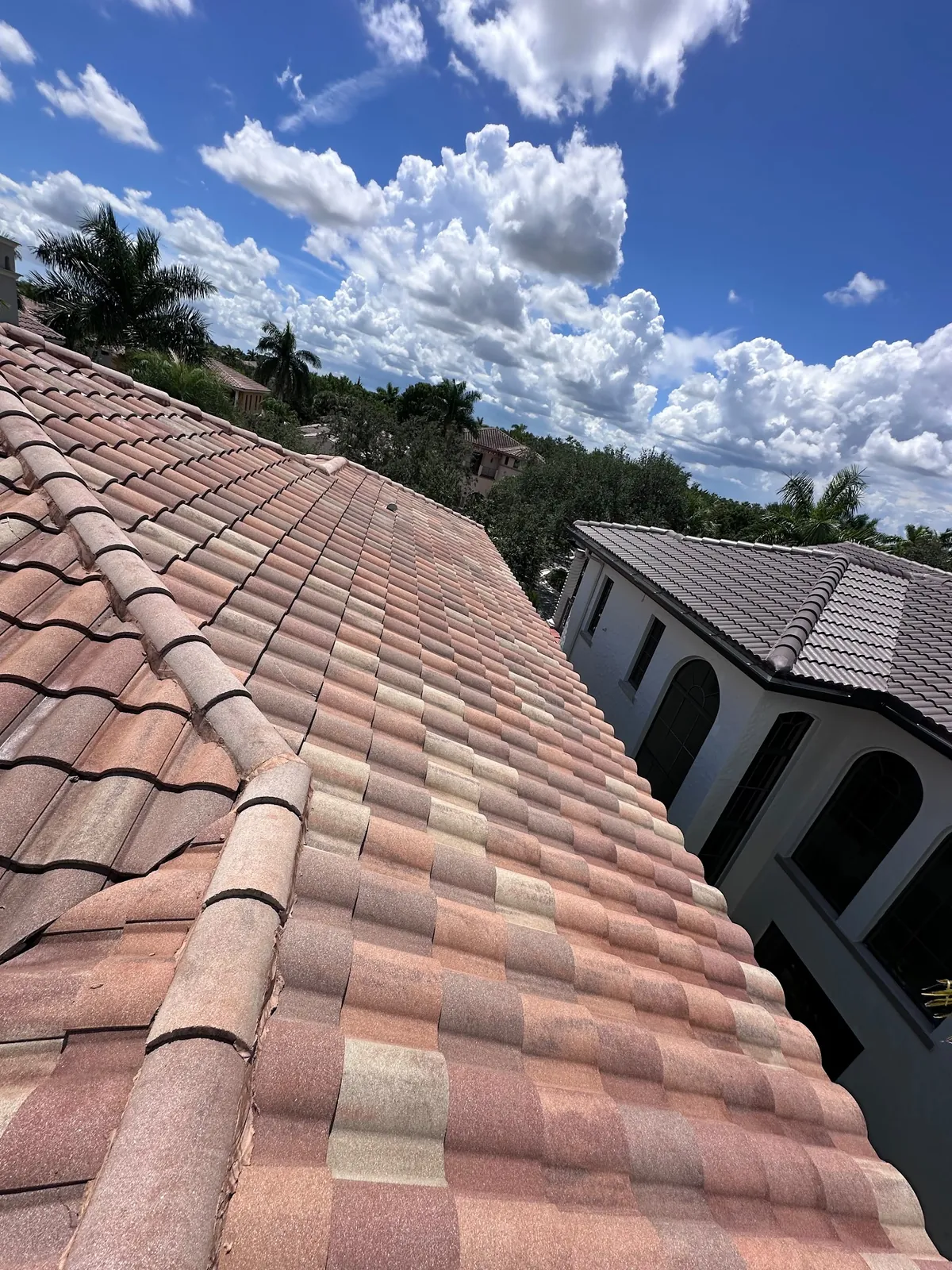
Tile cracked or blown loose
Concrete or clay tile snapped by flying debris, or prised up along the exposed edges and ridgelines.
Shingles and wind
Tabs folded, torn or stripped by gusts, and older shingle roofs that have turned brittle.
Flashing and pipe collars
Wall and valley flashing, chimney joints and the vent boots that crack after years of sun.
Eaves and roof edge
Long eaves with soft fascia boards and gaping soffit panels that let in rain and animals.
Storm paperwork
Photos and a written description of damage to each building, for your insurer.
Telling the roofer how to reach you
On acreage, a successful visit starts before the roofer leaves the yard. One Call passes on what you tell us, so the more specific you are, the better. When you call, cover:
- The entrance. Which gate to use if there is more than one, how it opens, and whether someone needs to be there to let the pro in.
- The drive. How long it is, what surface, and whether a loaded work truck or a trailer can turn round at the house. Mention soft spots after rain.
- Where to park. A spot near the house that is firm and clear of the septic field and the well head.
- Animals. Horses, dogs, goats or other animals that need to be put away or kept clear of the work area during the visit.
- The problem building. If the leak is in a guest house, stable or workshop rather than the main house, say which and where it stands on the property.
An exact address and a landmark or two help as well, especially where houses sit far back from the road and are not visible from it.
Large roofs take a methodical search
Many homes here are wide, sprawling single-storey houses, sometimes with a second-floor section, wraparound porches and wings added over time. A big roof hides a leak well. Water can enter near one end, run along the underlayment and a rafter, and show up over a hallway in the middle of the house.
To help the roofer narrow it down, tell One Call:
- The room where the water shows, and the spot within it.
- Whether it shows only with wind from one direction.
- Whether that part of the house was built at the same time as the rest, or added later.
- What the roof is made of over that area: tile, shingle, metal or a flat section.
The roofer starts inside, then works across the slopes above the stain, checking valleys, wall joints and penetrations in order. On a large roof this takes longer than on a small one, and that is normal.
It also helps to know where your attic hatches are. Big houses often have more than one, sometimes in a garage, a closet or a utility room at the far end of the house, and the roof space above a wing may only be reachable from its own hatch. Clear a path to each one before the visit. A look at the underside of the deck from inside, with a good torch, often shows the wet trail faster than anything seen from above.
Well water, power and the roof
With no city water main and often a long overhead or buried power line to the house, a few roof problems carry knock-on effects here that they would not in town. Water that gets into the attic can reach the wiring that feeds a well pump or a pressure tank in a utility room, and a leak over the room that holds the well equipment can stop the house’s water supply. Overhead service lines running to the house or to a barn can also sit close to the roof edge, which matters when a ladder goes up.
When you call about roof repair in Southwest Ranches, mention if the leak is near the room where the well pump, pressure tank or main electrical panel sits, and point out any overhead lines near the work area. The roofer deals with the roof. Any water in the electrics, or a pump that has stopped, is a matter for a licensed electrician or a well specialist, and you can ask One Call to arrange that too.
Debris, nails and horses
Roof repair produces broken tile, old underlayment, flashing scraps and nails. On a suburban lot that is a tidy-up problem. On horse property it is a safety problem. A single roofing nail in a paddock or a stable aisle can lame a horse, and shards of tile in grass are hard to see.
Before work starts, talk this through with the roofer:
- Ask that debris be collected into a bin or a truck, not thrown down onto grass where animals graze.
- Ask the roofer to run a magnetic sweeper over the ground under the work area, the parking spot and the path between them when the job is done.
- Keep horses and other animals out of the area until the sweep is finished.
- If the repair is on a barn or stable, plan for the animals to be moved for the day.
Mention all of this when you call. One Call passes it on so the roofer arrives prepared for a working property.
Where the ladder stands
Ladders want solid, even footing. On a large lot, the obvious spot beside the house may be over the septic drain field, a sprinkler line, the well or a soft garden bed. Septic fields in particular should not carry the weight of a loaded truck, a materials pallet or a lift, which can crush pipes and compact the soil.
If you know where your septic tank, drain field and well head are, point them out when the roofer arrives, or mark them beforehand. It protects systems that are expensive and slow to repair, and it means the pro can choose a safe spot straight away.
Barns, stables and other roofs
Most properties here have more than the house to look after: a barn, a stable block, a run-in shed, a workshop, a guest house, a pool cabana or a garage set apart from the house. Those buildings often have different roofs from the main house. Metal panel roofs are common on agricultural buildings, and shingle and low-slope roofs on the smaller ones.
Each fails in its own way. Metal panels move with heat and their fasteners back out, letting water in at every screw. Panel edges lift in wind. Shingle sheds and cabanas lose tabs to gusts. Low-slope roofs on workshops and carports pond water and open at the seams.
Few roofers take on every type. Give One Call a list: each building, its roofing material and the trouble you have seen. The match is made with that list in hand. The roofers One Call works with take flat roofs as well as tile and shingle, and if a single visit cannot cover every building, we say so and arrange what is needed. Doing the house and the outbuildings in one trip saves a long drive being made twice.
Wind with nothing in the way
Open pasture and wide lots mean that storm wind meets a house with little to slow it. Corners, eaves, ridges and hips carry the hardest gusts, and rain is driven sideways beneath the tile courses and in behind the flashing. Free-standing outbuildings, especially open-sided ones, catch wind underneath their roofs as well as over them.
After a blow, look first at:
- The edges and corners of each roof, where tile and shingle lift first.
- Ridge and hip caps, which loosen as the mortar ages.
- Metal panels pulled up at the eaves or the gable ends.
- Fascia and gutters pulled away from the house.
- Fencing, branches and loose equipment that may have struck a roof.
Walk the land too. Tile, shingle and flashing can travel a long way across open ground, and you want to find it before the animals do.
After the storm, building by building
Work through the property in order once it is safe:
- The main house: each visible slope from the ground, then every ceiling inside, including closets and the garage.
- Each outbuilding: roofs, then the inside, looking for water on floors, feed or equipment.
- The grounds: debris collected and kept, nails and sharp pieces removed from pasture.
- Photographs of everything, with the date, building by building.
If any roof has been opened by the storm, the roofer can stretch a temporary tarp across the opening to keep rain off the structure, the tack or the feed until the full repair. Leave the climbing to the roofer, whichever building it is.

Insurance on a property with several buildings
Policies often treat the main house and other structures differently, and some cover barns or stables under separate terms. Check yours before you claim. The claim itself runs between you and the insurance company; the roofer supplies evidence, not a decision. What the roofer provides is the record: pictures taken up on each roof, and a short written report per structure saying what failed and what the fix involved. File it alongside your own photos and the debris you gathered.
Permits and the county’s wind rules
Southwest Ranches lies in Broward County, inside the High-Velocity Hurricane Zone, where roofing products and fastening methods must be approved for high wind. Beyond a small fix, the job is permitted and inspected, with the licensed roofer filing the application. Farm buildings do not always follow the same permit path as a house. Ask the roofer how the rules apply to any barn or stable involved, before the work begins.
Covered porches, lanais and long eaves
Large ranch houses often carry deep porches and lanais along one or more sides, roofed either as an extension of the main roof or as a separate low-slope section tied into the wall. These areas see a lot of use, and leaks there show up as drips onto the porch floor, stains on the porch ceiling or soft spots in the beadboard.
The usual causes are the tie-in where the porch roof meets the house, ponding on a low-slope section, and fascia that has rotted along a long eave. Because a porch ceiling is often vented and open at the edges, it can also hide the damage for a long time. If the porch has started to sag or the ceiling feels soft, keep people off it and tell One Call. Roof repair in Southwest Ranches on a house like this often begins at the porch, simply because it is the part of the roof that sits lowest and catches the most water from above.
Bigger roofs, bigger decisions
A large roof that has reached the end of its underlayment is a significant job to replace, and the decision deserves care. If the roofer finds that repairs will no longer hold, they will tell you, with photos to show why. Replacement is within reach of the same network, since its roofers handle complete re-roofs, so the pro who found the problem can price the new roof too. On a roof this size, financing can make the timing easier; it is available, so bring it up on the call. In some cases a repair now and a planned re-roof later is the sensible path, and the roofer can set that out.
Gutters, runoff and the septic field
Big roofs shed a lot of water. Where it lands matters on a property with a septic system. A downspout aimed at the drain field loads it with roof water it was never sized for. When a gutter spills over its back edge, the fascia softens and water drops against the foundation. The roofer repairs the edge and can tell you if gutters are part of the leak. Moving a downspout so it discharges clear of the septic field is usually a drainage task, not a roofing one; the roofer will say where their part ends.
How One Call arranges roof repair in Southwest Ranches
- You describe the leak or the damage, the roof types involved and the route to the house.
- You mention animals, septic and well locations, and which buildings need work.
- One Call chooses a vetted roofer, carrying the licence and insurance your roofs need, who already covers this corner of the county.
- The roofer arrives prepared, inspects each building and walks you through what it needs.
- You agree the work and ask what the price covers before anything starts.
- The work is done, debris cleared and the ground swept. If a leak returns, One Call follows it up.
Payment is handled the same way every time: One Call bills you and pays the roofer, so one company answers for the job from the first conversation to the last.
Next door, One Call covers the same work on the Weston roof repair page and the Cooper City roof repair page.
Questions from Southwest Ranches
Can the roofer keep nails out of my pasture?
Ask for it. Debris can be collected into a bin rather than thrown onto grass, and a magnetic sweep of the work area and the parking spot at the end of the job picks up stray nails. Keep animals clear until it is done.
Will one visit cover the house and the barn?
Often, if the roofer works on both roof types. Tell One Call what each building’s roof is made of, so the match covers them and the long drive is made once.
Where should the truck park?
On firm ground away from the septic drain field, the well and soft lawn. Point those out, or mark them before the visit.
Is roof repair in Southwest Ranches subject to a permit?
Anything beyond a small fix, yes. The licensed roofer applies for the permit and arranges the inspection. Ask how the rules apply to barns and other farm buildings.
Arrange the visit
Tell One Call what is leaking, which buildings are involved and how to get to the house. We match you with a vetted, licensed roofer and stay with the job to the end.