
A leak on a waterfront house usually shows on the side facing the water, after wind has pushed rain hard against the roof. Catch the drip, move furniture and rugs clear, and keep away from any wet light fitting. Then call. For roof repair in Lighthouse Point, One Call Home Pros matches you with a vetted, licensed and insured roofer who works on the kind of roof your house has, whether that is clay tile, flat concrete tile, metal or shingle. One Call is a connector, not a roofing company. The roofer holds the licence and does the work; we arrange it, check the pro and see it through.

Why Lighthouse Point homes need roof repair
Lighthouse Point is small, and almost all of it is single-family housing on the water: homes along the canals, the Intracoastal and the lake, most with a dock and many with a boat at it. The houses are larger than the county average, and the roofs, finishes and systems on them are often higher-end than almost anywhere else in Broward.
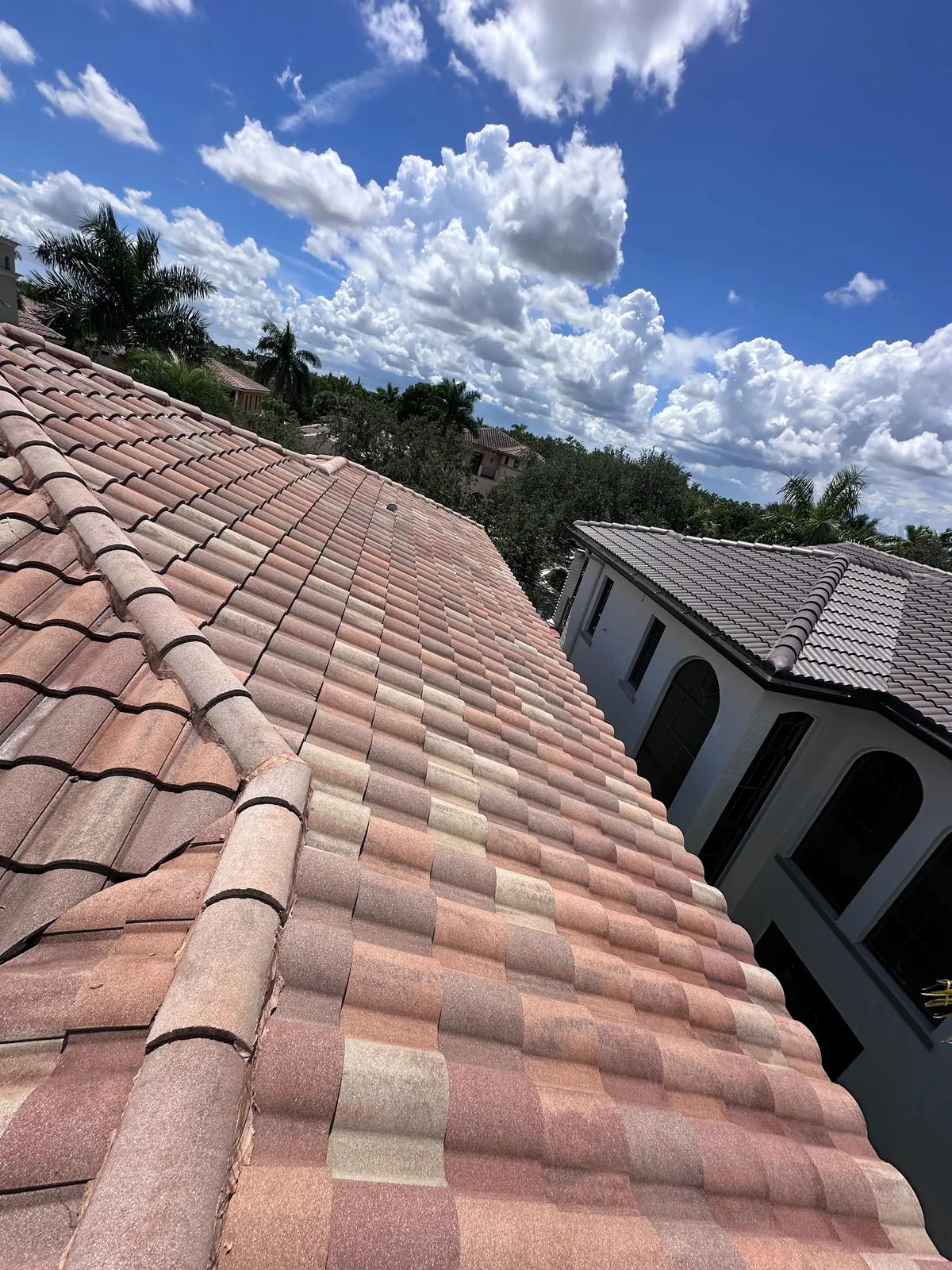
Two things follow for the roof. First, salt. Every house here sits in air carried off open water, and the metal on a roof feels it: flashing, fasteners, gutters, vent caps and any decorative copper or steel. Second, the materials. Clay barrel tile, flat concrete tile in custom colours, standing seam metal and copper details are common, and repairing them well takes a roofer who knows each one.
There is also the setting to think about. A pool, a paved deck, planting, a screen enclosure and a dock with a boat moored at it surround many of these houses. A good repair protects all of that while the work goes on.
Roof problems on waterfront homes
Leaks after wind off the water
Water driven under tile and flashing on the side of the house that faces the canal.
Slipped and cracked tile
Clay and concrete tile broken, displaced or carried off, with the underlayment exposed.
Wind-lifted shingles
Shingle tabs pulled loose on exposed slopes and older shingles dried by sun.
Corroded flashing and boots
Salt-pitted valley and wall metal, and vent collars cracked by heat.
Fascia and soffit
Rotted fascia behind gutters and soffit loosened at the eaves.
Records for a claim
Photos and a written report of storm damage for your insurer.
Tell us what the roof is made of
The single most useful thing you can say when you call is what covers the roof. Not every roofer works on every material, and the match matters more on a house with an unusual or high-end roof. If you know, tell One Call:
- Clay barrel tile. The rounded, often terracotta tile laid in overlapping rows. It is brittle, so a roofer has to know how to walk on it without cracking more.
- Flat or low-profile concrete tile. Common on newer and rebuilt homes, sometimes in custom colours that are hard to match.
- Standing seam metal. Long panels joined by raised seams, with concealed fasteners. Repairs need the right panels and the right tools.
- Shingle. Less common on the larger homes here, but found on some older ones.
- Flat sections. Over loggias, covered terraces or parts of the house, usually membrane.
If you are not sure, a photo of the roof from the yard or the dock is enough. Mention any copper details too: valleys, gutters, a cupola or decorative trim.
Salt from every direction
On most streets, the canal is behind the house and the street in front, and salt air reaches the roof from both sides. Near the Intracoastal or the inlet, it comes more strongly still. Over time it works on every piece of metal on the roof.
Galvanised steel loses its coating and rusts. Aluminium pits. Copper turns green, which is a normal protective patina, but it can also corrode where it touches other metals or where water from it runs over steel. Fasteners holding tile can corrode out of sight, and the tile then lets go in the next strong wind.
When a pro replaces flashing or fasteners on a house this close to the water, ask what they plan to use. Stainless, copper and coated metals each have their place, and mixing metals carelessly can make corrosion worse. A good roofer explains the choice.
Protecting the house and the dock during the work
On a house with a pool deck, landscaping and a dock, where the roofer sets up matters. Before the visit, talk to the pro about:
- Where materials are staged. A driveway is usually best. Tile and metal should not be stacked on pavers that will mark, or on a dock.
- Covering the pool. Old tile, grit and nails falling into a pool or a hot tub are a nuisance to clear. Ask whether the pool will be covered or netted beneath the work area.
- The screen enclosure. Many enclosures are fixed to the fascia. The roofer will need to work around them without loading the frame.
- The water. Debris blown or dropped into the canal is a problem. Ask how the pro catches it on the waterside slopes.
- The boat. If the boat is moored right beside the house, consider moving it or covering it while work goes on overhead.
None of this is unusual to ask, and a roofer who works in waterfront neighbourhoods will expect it. Telling One Call about the setting when you call helps us match a pro who works this way.
The side that faces the water
Open water gives the wind a long run with nothing to slow it, so on most of these houses the waterside slope takes the worst of every storm. Edge tiles, hip and ridge caps and the first courses at the eave are the first to loosen. Rain is pushed up under tile laps and in behind the flashing where a roof meets a wall. Many waterside rooms are also the ones with the largest windows and the highest ceilings, so a leak there tends to show on expensive finishes.
When you call about roof repair in Lighthouse Point, tell us which room the water shows in and whether it faces the water. The pro starts on that slope and works out from there.
Complex roof lines on larger houses
Bigger houses have bigger, more complicated roofs. A two-storey home with wings, a garage, a covered loggia and a few dormers can have a great many valleys, hips and wall joins. Each join is a place where water has to be turned by flashing, and each one ages.
Some of the usual trouble spots:
- Valleys that collect leaves from waterfront trees and slow the water down.
- Low roofs over a loggia or a garage tied into the wall of the upper storey, where water from the whole wall meets the flashing.
- Dormer cheeks and the small roofs over bay windows.
- Chimneys from fireplaces and outdoor kitchens, each with flashing round it.
- Skylights and sun tunnels, sealed at the frame.
On a roof like this, finding the source of a leak can take time, because water can travel a long way along a valley or under tile before it drips. A thorough pro traces it rather than guessing.
Flat roofs over loggias and terraces
Covered loggias and terraces facing the water are often roofed flat or nearly flat, sometimes with a deck or a balcony above. These roofs drain to a scupper or a drain at the edge. When the drain clogs or the membrane splits at a corner, water can come through into the ceiling of the room below, or run inside the wall.
A balcony that also serves as a roof is a mixed job. The roofer can deal with the waterproofing beneath it and the flashing at its edges. Tile or paving laid on top, and the railings, may need another trade. Ask the pro where their part begins and ends.

Solar arrays, antennas and other things on the roof
Larger houses tend to carry more on the roof: solar panels, a solar pool heater, satellite and marine antennas, lightning protection, exhaust vents for a generator or a kitchen. Every bracket and every cable that passes through the covering is a hole that relies on a seal, and near the water each metal mount is also a corrosion point.
A leak beneath a solar array is awkward, because the panels hide the roof. Some or all of them may have to be lifted to reach the source, and the solar installer may need to be involved to disconnect and refit them. Before the visit, find the paperwork for the system and any installer’s warranty, and tell One Call what is up there so the pro arrives knowing.
If an antenna or a mount has worked loose in wind, it can also scrape and crack the tile around it. Point it out to the roofer, who can reseal or reflash the base. Refixing the equipment itself may be a job for whoever installed it.
What lies under the tile
Tile, whether clay or concrete, is not the waterproof layer. It shields what is underneath from the sun and sheds most of the rain. Beneath it, the underlayment keeps water out of the house. On an older tile roof, that underlayment can be dry and brittle long before the tile looks worn.
This is why a single broken tile can lead to a leak that seems out of proportion. With the tile gone, sun and rain reach an underlayment that may already be near the end. When the pro lifts tile to make a repair, ask what the underlayment looks like and how widely it has aged. It tells you a great deal about how much life the roof has left.
Gutters, leaders and where the water goes
Many houses here have copper or seamless aluminium gutters, sometimes with rain chains or leaders running into drains in the paving. When a gutter clogs or a seam opens, water spills behind the fascia, rots the wood and runs down the wall. The roofer replaces rotted fascia and soffit and makes good the roof edge. Repairing or rehanging copper gutters is specialist work, so if they are part of the problem, mention it, and ask whether the roofer includes them.
Before the storm season
A look at the roof from the ground and the dock before the storm months is worth the few minutes it takes. From a distance you can often see:
- A tile sitting higher than the ones around it, or a gap in a row.
- A ridge or hip cap out of line.
- Streaks of rust or green below a flashing.
- A gutter sagging or a leader loose.
- Palm fronds or branches lying on the roof.
Anything on that list is simpler to deal with in settled weather than once a storm has turned it into a leak. Taking dated photos of the whole roof before the season starts also gives you a record of its condition for your insurer.
When a storm has passed
Walk round the house once it is safe and look at every slope you can see, including from the dock and the far side of the canal if you can. Look for missing tile, shifted ridge caps, bent flashing and loose soffit. Check the pool and the yard for fallen roof material and keep what you find. Inside, keep watching ceilings for several days.
If part of the roof has been opened, the roofers One Call works with can fit a temporary cover or tarp over it until the repair. Do not climb up. Wet tile is slippery and breaks underfoot, and wind off the water makes ladders dangerous.
Insurance on a higher-value home
On a larger, higher-value house, a roof claim usually involves more detail and more scrutiny. Your claim is with your insurer, and the roofer does not act as your adjuster. What the roofer can provide is the record from up on the roof: photos of each area of damage and a written description of what was found and what the repair involves.
Matching is often a question on these claims. If a custom-coloured tile or a clay profile cannot be matched, ask the roofer to say so in writing, with the reasons. Keep that with your own photos from before and after the storm.
It also helps to keep the original roof paperwork if you have it: the permit, the product name and colour of the tile or metal, and the installer’s details. With those in hand, a roofer can often trace the exact product or its nearest current equivalent, and your insurer can see what was on the house before the damage.
Permits and the wind code
Larger repairs need a building permit and an inspection in Florida, and coastal Broward is in the state’s High-Velocity Hurricane Zone, where how tile and metal are fastened is closely controlled. The licensed roofer pulls the permit. Ask how the repair will meet current fastening requirements, especially on clay tile, where older installations were often set differently.
How it comes together
- You call or send the quote request, describing the roof, the room where the water shows and anything around the house the pro should know about: pool, enclosure, dock.
- One Call matches a vetted roofer, licensed and insured for that roof type, who works in Lighthouse Point.
- The pro inspects, finds where the water gets in, and explains the repair, the materials and how the work area will be protected.
- You agree the price, having asked what it covers.
- The work is done, with a permit where needed.
- If water shows again after the repair, tell One Call and we take it up with the pro.
You pay One Call, and One Call pays the roofer. Financing is available for larger roof work; ask about it when you call. If the roof has reached the end, the pro will tell you, and the roofers One Call works with also do full re-roofs, so roof repair in Lighthouse Point can lead straight on to a replacement quote if that is the better choice.
Nearby, the same service runs through roof repair in Deerfield Beach and roof repair in Pompano Beach.
Questions from Lighthouse Point
My roof is clay barrel tile. Can any roofer repair it?
Not every roofer works on clay. It is brittle and has to be handled and walked on with care. Tell One Call the roof is clay when you call, and the match takes it into account.
Why is there green streaking below the roof valleys?
Copper valleys, gutters or trim turn green as they weather, and rain carries that colour onto the wall. It is not always a fault, but if the streaks come with a leak, or the metal looks pitted, have it checked.
How will the pool and the dock be protected during the work?
Talk it through with the pro before work starts: where materials are kept, whether the pool is covered, and how debris is kept out of the canal. Mention the setting when you call.
The tile on my house is a custom colour. What if it cannot be matched?
The pro will look for the closest match. If it cannot be matched, ask for that in writing, which also helps with any insurance claim. Roof repair in Lighthouse Point on custom tile sometimes means borrowing sound tiles from a less visible slope.
Have the roof looked at
Tell us what the roof is made of, where the water shows and what is around the house. One Call arranges a vetted, licensed roofer and stays with the job until it is finished.