
If you are renovating an older house, the roof is the part to settle first, because every finish inside depends on it staying dry. If water is already coming in, catch it, keep it off the floors you have just laid, and call. For roof repair in Oakland Park, One Call Home Pros matches you with a vetted, licensed and insured roofer who works on mid-century houses, and arranges the visit around whatever else is going on in the house. One Call is a connector. The roofer holds the licence and carries out the repair; we set it up, check the pro and keep the job on track.

Why Oakland Park homes need roof repair
Oakland Park is one of the older inner-ring cities in the county. Much of its housing is single-family from the 1950s and 1960s: low, wide ranch houses with shallow roofs, deep overhangs, carports and Florida rooms. Many of those houses are now being renovated, room by room or all at once. Among them stand newer infill homes built where an older house once was.
Renovation and roofing meet all the time here. Opening a ceiling often reveals the stain of a leak nobody knew about. Taking out an old wall can show rotted wood where the roof meets it. Owners converting a carport, adding a room or putting in skylights change the roof as much as the inside.
The houses carry their age in the same way throughout. Original wiring and galvanised supply pipes turn up constantly, and the roof is often just as old underneath. Low pitches, plank decking, built-up flat sections and hand-formed flashing were normal when these homes were built. A good repair respects how the roof was made, then brings it up to the standard it has to meet now.
What a roofer handles on an older house
Leaks found during work
Old stains and wet wood uncovered when ceilings or walls come out, traced to the roof.
Cracked and loose tile
Broken concrete tile and pieces lifted by wind, with the underlayment checked beneath.
Wind-lifted shingle
Shingle tabs torn or loosened on low slopes, and brittle older shingle.
Flashing and vent boots
Hand-formed flashing at old walls, and boots round vent pipes that may themselves be old.
Rotted fascia and soffit
Deep overhangs with soft fascia and sagging soffit, common on ranch houses.
Storm and insurance records
Photos and a written report of wind damage for your insurer.
Fix the roof before the finishes
The order of work matters in a renovation. New drywall, paint, flooring and cabinets are only as safe as the roof over them. If a leak shows up halfway through, or if the roof is old and you are not sure of it, deal with it before the finishing trades come in.
A sensible sequence for a house under renovation:
- Have the roof inspected early, while ceilings are open and the deck can be seen from below.
- Repair leaks and replace soft decking before insulation and new ceilings go in.
- Plan any roof changes, such as skylights, new vents or a roof over a converted carport, at the same time.
- Get the roof dry and passed, with a permit where needed, before interior finishes.
- Keep the roofer’s report with the rest of your renovation paperwork.
If you are working with a general contractor, tell them the roofer is coming. If you are managing the trades yourself, One Call can arrange the roofer around your schedule. Tell us what stage the work is at when you call.
What opening a ceiling tells you
When an old ceiling comes down, you see the roof from the inside, often for the first time in decades. That is the best chance you will get to check it. Look for:
- Dark stains on the underside of the deck or the rafters, which mark old leaks.
- Wood that is soft when pressed with a screwdriver.
- Daylight through the deck, especially at the eaves.
- Nails coming through that are rusted, which means water has reached them.
- Old patches from inside, such as a piece of board nailed over a hole.
Photograph anything you find and show it to the roofer. Stains that are dry may be from a leak repaired long ago, or from one still active. The roofer can tell from the roof above.
Plank decking and low pitches
Many houses of this age were built with a deck of solid wooden planks rather than plywood sheets, sometimes left exposed as the ceiling in a living room with beams. Plank decking is sturdy, but where water has been getting in, planks rot, especially along the eaves and around openings. Gaps between old planks can also make it harder to fasten new roofing to current wind standards.
Low-pitched roofs were common on ranch houses too. A shallow roof sheds water slowly, and wind-driven rain can be pushed up under tile or shingle on it more easily. Some low slopes are too shallow for the covering that was put on them in a later re-roof.
When the roofer inspects, ask about the deck and the pitch as well as the covering. Replacing a section of rotted plank, or adding a layer of sheathing over the planks where the code requires it, may be part of doing the repair properly.
Flat roofs over carports and Florida rooms
Many mid-century houses here have flat or nearly flat sections: over a carport, a Florida room, a utility room or an addition at the back. These were often built with tar and gravel or rolled roofing, and they are frequently where an older house leaks first. Water sits on them, seams split, and the join where the flat section meets the pitched main roof is a weak point.
If you are converting a carport into a room, the roof over it matters more than ever, because it now protects living space. Have the roofer look at it before the conversion starts. The same goes for a Florida room being turned into a family room or a kitchen extension.
Vent pipes and the house’s old plumbing
Older houses in Oakland Park often still have galvanised supply lines, and the vent pipes coming through the roof may be just as old: cast iron or galvanised steel, rusted at the top and around the roof line. A roofer seals and flashes the vent pipe where it passes through the roof. If the pipe itself is rusted through, or cracked below the roof, that is a plumbing repair.
If you are re-plumbing during the renovation, the vent pipes may change too. Plan it so the plumber’s new vents go through the roof before the roofer makes the roof good, not after. One Call can arrange a plumber for that part as a separate job.
Old wiring in the roof space
The same goes for wiring. In an older house, the roof space often carries original cable, junction boxes and connections that were never meant to get wet. If water has been coming in near a light fitting or along a run of cable, turn that circuit off and have it checked by an electrician before you use it again. The roofer will stop the water but does not touch the wiring.
If a renovation involves rewiring, coordinate it with the roofer as well. New ceiling fans, lights and exhaust fans can mean new vents or new holes, and each one has to be flashed properly.
Skylights, solar and other additions
Renovations bring new things onto the roof. Skylights and sun tunnels let light into a dark mid-century interior. Solar panels need brackets fixed into the roof. A new kitchen or bathroom needs an exhaust vent. A new AC system may have a different line set route.
Every one of these makes a hole in the roof, and the hole is only as good as the flashing round it. When you plan an addition, ask whether the roofer can make or seal the opening, or whether another trade will do it and the roofer will make it good. Roof repair in Oakland Park on a renovated house is very often a matter of tidying up after work done by others. A roofer who sees the opening before it is finished can make sure it is done right the first time.

Newer infill homes
Not every house here is old. Infill homes built on lots where an older house stood are newer, often taller, with modern roofs. A leak on a newer house is usually at one detail: a valley, a wall flashing, a vent boot or a join between roof planes. If the house is new enough that a builder’s or installer’s warranty may still apply, find that paperwork before you call, so the installer’s warranty is not affected.
A new house beside an older one can also change things for the older roof. A taller neighbour may shade parts of the roof, keeping it damp longer, or drop leaves from new landscaping into your gutters. Construction next door can throw debris onto your roof. If your leaks started when the neighbouring house went up, mention it.
Buying an older house to renovate
Many renovations here begin with a purchase. If you are buying an older house in Oakland Park with plans to rework it, the roof deserves its own look before or soon after closing, separate from the general home inspection. A general inspector looks from the ground or walks the surface. A roofer can tell you more about the deck, the flashing and how much life the covering has left.
That knowledge shapes the whole renovation budget. A roof with a few failed details can be repaired early and forgotten. A roof near the end changes the plan: it may make sense to replace it before any interior work, and to fold changes such as skylights or a new layout of vents into the new roof rather than cutting into it later. Either way, you want to know before the kitchen goes in.
Ask the roofer to write up what they find, with photos. It becomes the first page of the house’s roof history.
Overhangs, fascia and soffit
Mid-century houses often have generous overhangs, which shade the walls and keep rain off the windows. They also mean long runs of fascia and wide soffits, which take a lot of weather. Fascia boards rot where gutters overflow. Soffit panels sag, and gaps open for rats and birds. On a house that has been empty or neglected before a renovation, animals in the roof space are common.
The roofer replaces rotted fascia and refits or replaces soffit. If animals are living in the roof, have them removed by a wildlife professional first, then seal the openings.
Tile and shingle on the older roofs
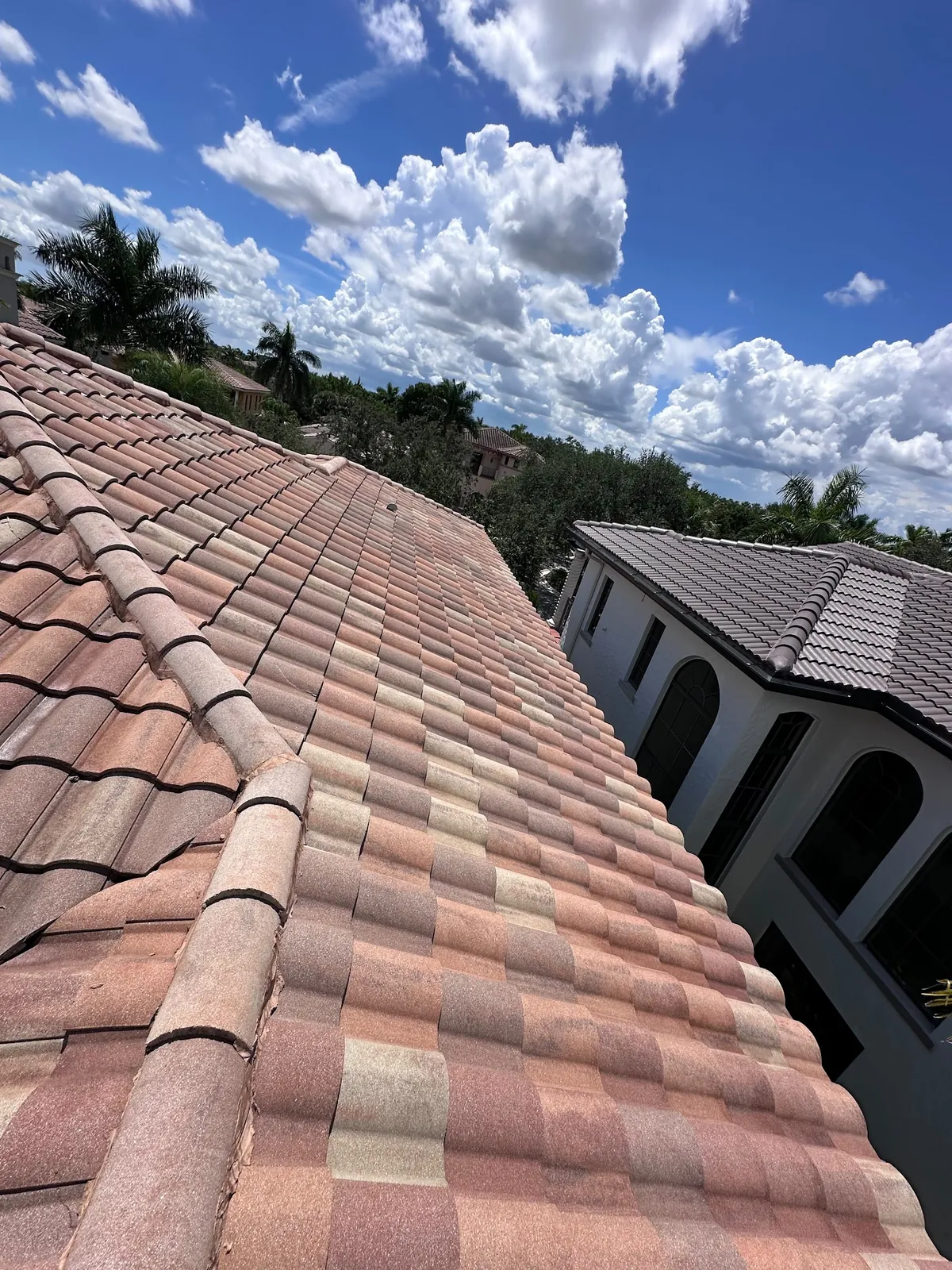
Many of these houses have been re-roofed in concrete tile or shingle since they were built. On tile, the underlayment beneath is what keeps water out, and once a tile breaks, sun and rain go straight to it. On shingle, the sun dries out the seal strip that holds each tab down, and wind then lifts it.
Repairs mean replacing the broken or missing pieces, checking the underlayment or deck beneath, and fixing the new material to current wind requirements. On an older house, matching tile can take some searching, so if any spare tiles were left from an earlier job, tell the pro.
Strengthening the roof while it is open
When part of a roof is opened for repair on a house this age, it is worth asking what can be strengthened at the same time. On older roofs, the deck may have been nailed to a lighter standard than current wind rules require, and there may be no secondary water barrier under the covering at all. Some improvements are required by code when enough of the roof is replaced. Others are optional but sensible.
Ask the roofer what the code requires for the work you are having done, what else they would suggest, and how it might affect your insurance. Some insurers look favourably on wind-resistance features, and a wind mitigation inspection after the work can record them.
When a storm has passed
Look at the roof from the ground once it is safe. Missing tile, torn shingle, flashing bent away from a wall and soffit hanging loose are all visible from the yard. If the house is mid-renovation with ceilings open, look up from inside too: daylight or fresh water on the deck tells you where to point the roofer.
The roofers One Call works with can fit a temporary cover or tarp over an opening to keep rain off until the repair. That matters even more on a house with new finishes inside.
Insurance for an older house
Insurers often take a close look at older houses, and the roof is high on their list, along with wiring, plumbing and AC. A renovation is a good time to get the roof into shape and keep evidence that it is. After any repair, keep the roofer’s photos, the written description of the work, and the permit and final inspection.
If you are making a storm claim, your claim is with your insurer, and the roofer is not your adjuster. What the roofer provides is the evidence from the roof itself.
Permits
In Florida, repairs beyond small fixes need a building permit and an inspection, and Broward applies strict wind standards. On a house with an open renovation permit, ask the roofer how the roof work fits with it. The licensed roofer pulls the roofing permit.
How it works with One Call
When you call, tell us what is wrong, what stage the renovation is at and what is planned for the roof. One Call matches a vetted roofer, licensed and insured for that roof, who works in Oakland Park. The pro inspects, explains the repair and the price, and works around the other trades where possible. You pay One Call, and One Call pays the roofer. Financing is available for larger roof work; ask about it when you call. If the roof turns out to be beyond repair, the roofers One Call works with also do full re-roofs.
If water shows again after the repair, tell One Call and we follow it up with the pro. For roof repair in Oakland Park’s neighbours, see roof repair in Wilton Manors and roof repair in Fort Lauderdale.
Questions from Oakland Park
We are renovating. When should the roofer come?
Early, while ceilings are open and the deck can be seen. Repair the roof and any soft decking before insulation, new ceilings and finishes go in.
We found an old water stain when the ceiling came down. Is it still leaking?
It may be old or still active. Photograph it and show the roofer, who can check the roof above and tell you which.
Our house has a plank deck. Does that affect the repair?
It can. Rotted planks may need replacing, and the roofer may need to add sheathing to fasten new roofing to current wind standards. Ask about the deck when they inspect.
Can the roofer fit a skylight at the same time?
Ask the pro. Some will make and flash the opening themselves; in other cases another trade fits the unit and the roofer makes the roof good around it.
Get the roof settled first
Tell us where the water shows and what the renovation involves, and roof repair in Oakland Park can be fitted around the rest of the work. One Call arranges a vetted, licensed roofer and stays with the job until the roof is sound.