
A roof leak in an apartment or condo building rarely affects just one home, and it rarely has just one person responsible for it. Before anything else, protect the room: catch the water, move what you can, and switch off the circuit for any wet light. Then make sure the right person knows. For roof repair in Lauderhill, One Call Home Pros matches a house owner, a landlord or a condominium association with a vetted, licensed and insured roofing professional, sets up the visit and follows the job to the end. One Call is a connector and holds no roofing licence. The roofer does the work.

Why Lauderhill homes need roof repair
Lauderhill is densely built, and most of it dates from the 1960s and 1970s. A large share of its housing is condominium and apartment buildings, laid out in complexes of several buildings around parking, pools and lawns, with single-family streets between them. Many homes are rented.
In buildings of that age, the systems shared by everyone have been ageing together for decades. On the roof that means the membrane, the drains, the gutters and downspouts, the vent stacks, the hatches and the flashing at every wall. Many buildings from the period also wear a mansard, a steep band of shingle or tile around the top, which is a roof in its own right with its own leaks.
When a shared roof fails, water may come into a home whose owner did not cause it and cannot fix it. Getting a repair done means knowing who owns which part of the building, and getting the information to them quickly.
Roofing work for homes and buildings
Ceiling and wall leaks
Water entering upper-floor homes, followed back to the roof, the mansard or the parapet.
Cracked or missing tile
Concrete tile broken by wind or foot traffic on houses and mansards.
Shingles lifted or shed
Mansard and house shingles that have lost their seal, slipped or blown off.
Flashing and vent boots
Failed metal at walls and curbs, and dried collars round shared vent stacks.
Soffit, fascia and roof edges
Rotten boards and loose soffit along long building eaves.
Storm damage write-ups
Photos and written findings for the owner’s or the association’s insurer.
Who arranges the repair
Because so much of the housing here is shared or rented, the first question after a leak is not what is wrong but whose job it is. A rough guide:
- You rent your home. Tell your landlord, or the managing agent, straight away and in writing, with photos. The landlord arranges the repair, or passes it to the association if the building is a condo.
- You own a condo unit. The roof is almost always a common element. Report the leak to the manager or the board in writing, with dated photos, and keep copies.
- You own a rented condo unit. Tell the association, and keep your tenant informed. You may also need to arrange repairs inside the unit once the roof is fixed.
- You own a whole apartment building or a house. The roof is yours, and you can call One Call directly.
- You manage a complex or sit on the board. Call One Call with details of the building and the problem.
One Call can send the roofer’s certificate of insurance and the approval paperwork to an association, which removes one of the usual hold-ups before work can start.
What to note before you report it
Whoever you report to, a clear description gets the right roofer to the right spot sooner. Note:
- The building and the floor, and which room shows the water.
- Whether it is near an outside wall, a window, a light fitting or the middle of the ceiling.
- When it leaks: every rain, heavy storms only, or a day after rain.
- Whether neighbours on the same floor have the same problem.
- How long it has been happening.
Photos help most of all: the ceiling, the wall, and if you can see it, the roof edge outside your window.
Shared systems that have aged together
In a building put up decades ago, the parts that serve everyone tend to wear out at the same pace. On the roof, that list is long:
- Roof drains. Flat roofs drain through openings in the roof surface to pipes inside the building. Their strainers clog, their seals harden, and the roof around them sags.
- Gutters and downspouts. Long runs along the eaves of garden buildings, often clogged, often pulling away.
- Vent stacks. Plumbing vents from several homes rising through the roof, each sealed with a boot or a flashing that dries out.
- Roof hatches. Access hatches whose curbs and seals leak when they are old.
- Wall flashing. Where the roof meets stair towers, mechanical rooms and the walls of taller sections.
Because these age together, a leak at one is often a warning for the rest. When a roofer comes to repair one, it is worth asking them to look over the others while they are on the roof.
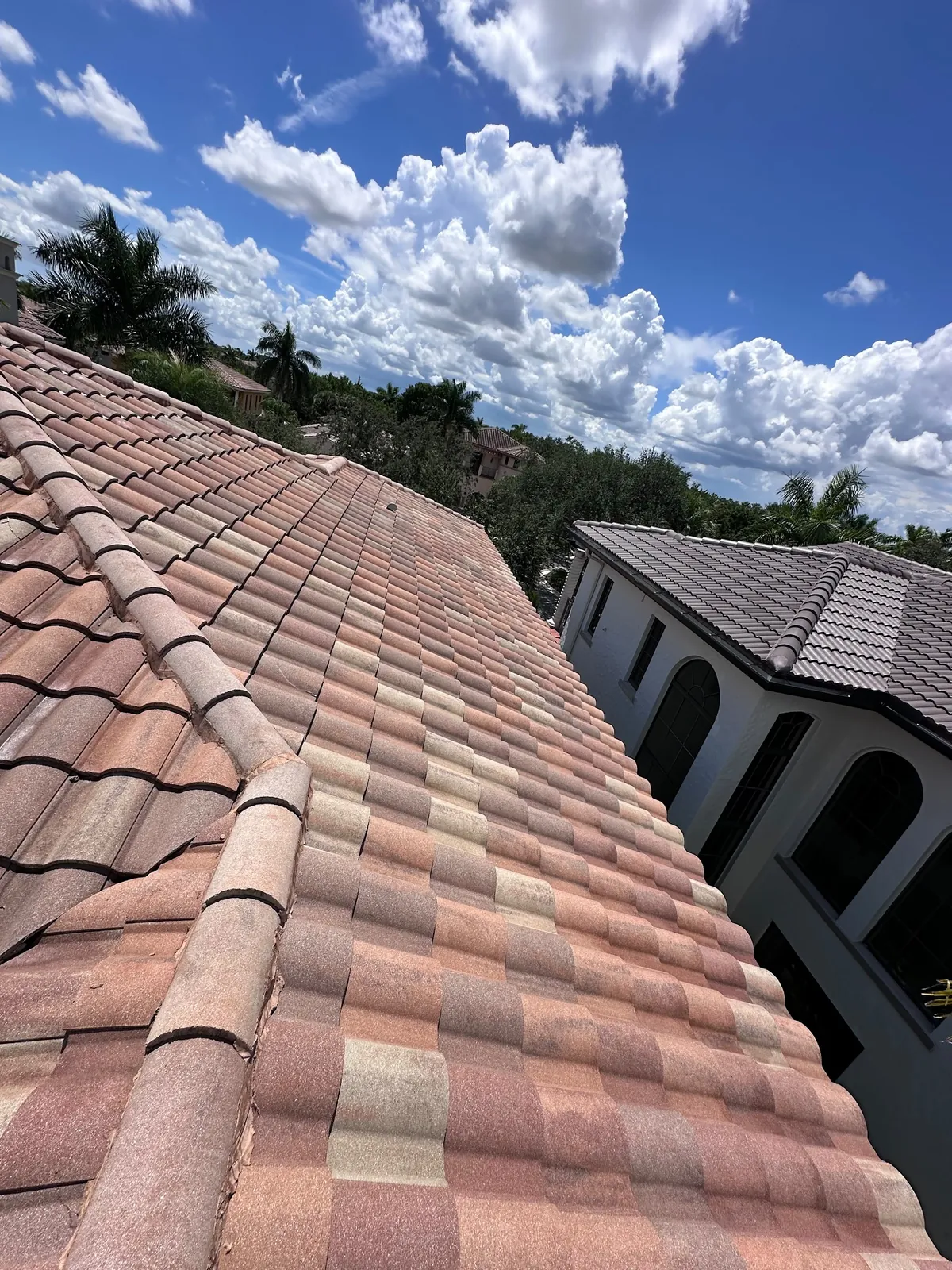
Mansards on older buildings
Many condominium and apartment buildings of this period have a mansard: a steep band of shingle or tile around the upper edge, wrapping a flat roof behind it. From the street it looks like a pitched roof. In practice it is two roofs meeting, and the meeting point is a weak spot.
Mansards leak in a few typical ways:
- Shingles or tile on the steep face slip or blow off, because steep slopes are harder to fasten securely.
- Water gets in at the top, where the mansard meets the flat roof behind it, if the flashing or the edge detail has failed.
- Water runs down behind the mansard into the wall and shows up around top-floor windows.
If your building has a mansard and the leak is on the top floor near an outside wall, mention the mansard when you call. Not every roofer takes on steep mansard work, and the match should allow for it.
Drains, leaders and leaks that are really plumbing
On a flat-roofed building, the water that falls on the roof runs into drains and then down pipes inside the building, called leaders, to the ground or the storm system. When one of those pipes cracks or a joint fails, water leaks inside the building during rain, sometimes floors below the roof. It looks exactly like a roof leak.
A roofer can check the drain and its seal at the roof surface. If the drain is sound and the water is coming from the pipe below it, that is a plumbing repair. One Call can arrange a plumber for that as a separate job. Telling the roofer about any leak that appears in the middle of a building, well below the top floor, helps them rule the roof in or out.
Complexes with many buildings
A complex with several buildings often has several roofs of different ages, each patched at different times. For a board or a manager, roof repair in Lauderhill is frequently a matter of keeping track. It helps to:
- Keep a record for each building: the roof type, when it was last replaced if known, and every repair since.
- Ask the roofer to look over the whole roof of any building they visit, and report its condition, not just the repaired spot.
- Compare reports over time to see which roofs are failing faster.
- Plan larger work for the roofs that keep leaking, rather than patching them every season.
The roofing pros One Call works with take condo and flat-roof work, and also do full re-roofs, so the same match can carry on into planned replacement where that makes sense. Financing is available for larger roof work; ask about it when you call.
Rooftop AC and the holes it leaves
On many low-rise buildings here, the outdoor AC units for each home sit on the roof, with refrigerant lines and power running down through the roof to every home. Every one of those lines passes through the roof covering and relies on a seal. When a unit is replaced, a new hole is sometimes made and the old one patched in a hurry.
The result, over the years, is a roof crowded with penetrations of different ages. Leaks around them are common, and they are often blamed on the wrong unit. The roofer can reseal or reflash the penetrations properly and point out ones that are no longer in use and should be closed. AC technicians also walk the roof to reach their units, so worn paths in the membrane are worth a look.

Getting onto a building’s roof
On a garden apartment building, the roof may be reached by a ladder against the eaves, a fixed ladder in a stairwell up to a hatch, or a door from a stair tower. Hatches on older buildings are often stiff, locked or leaking themselves, and the key is not always where anyone expects it.
Before the roofer arrives, find out how the roof is reached and who holds the key. If the only way up is a hatch above someone’s landing, tell the people nearby. If the hatch itself leaks, which is common when its curb flashing or its seal has aged, add it to the list for the roofer. A hatch that will not close properly after the visit is one more way for rain to get in.
Old patches on old roofs
On a roof that has been leaking on and off for years, it is common to find patch upon patch: roofing cement smeared round a pipe, a square of membrane over another square, sealant run along a seam. Each one held for a while. Together they make it hard to see where the water is really getting in, and they can trap water underneath.
A good repair cuts back to sound material, finds the actual opening and repairs it with the right materials for the roof. Ask the roofer to explain what they found under the old patches, and to photograph it.
The single-family streets
Among the complexes, Lauderhill has streets of single-storey and two-storey houses from the same decades, many with concrete tile, some with shingle, and often a flat-roofed back room added later. Their problems are the familiar ones of an ageing roof: brittle underlayment under the tile, cracked vent boots, rusted flashing in old stucco, fascia rotted behind clogged gutters, and leaks where an addition meets the main roof.
If you own a house, the roof is yours to arrange, and you can call One Call directly. Tell us where the water shows, what the roof is made of, and whether the house has an addition at the back.
Storm season on a complex
On a complex, the weeks before the storm months are the time to send someone round every building with a checklist. Drains and scuppers clear of leaves. Gutters emptied and fixed firmly. Nothing loose on the flat roofs: old equipment covers, abandoned cabling, offcuts left after past jobs. Mansard shingles that already look loose noted for repair before the wind finds them.
Afterwards, when the weather has settled, the same walk round tells you what moved. Count missing mansard shingles and tile, look for flashing peeled back and soffit hanging, and gather whatever has fallen into the parking lots and lawns. Any opening in a roof needs covering before the next rain, and the roofers One Call works with can fit a tarp or temporary cover until the permanent fix is made. Leave climbing to them.
Three policies, one leak
A single roof leak in a rented condo can touch three insurance policies. The association’s master policy covers the roof and the building’s structure, and the board makes that claim. The unit owner’s own policy covers the inside of the unit, the finishes and fixtures the master policy leaves out. The tenant’s renter’s cover, if they have it, protects their furniture and belongings. In an apartment building with one owner, the owner’s policy covers the building, and tenants still look after their own possessions.
Whichever policy is involved, the insurer will want evidence. The roofer can provide pictures from up on the roof and a written account of the damage and the work. The roofer is not an adjuster and does not handle the claim. Keep dated pictures of each room yourself.
Permits
In Florida, anything more than a minor fix on a roof needs a building permit and a passed inspection, and the wind standards in Broward are demanding. The licensed roofer applies and books the inspector. On a condo complex, a board approving several buildings’ repairs at once should ask how the permits will be handled for each.
Working round people who live there
A roof repair on an occupied building affects everyone in it. Noise, ladders at entrances, materials in the parking area and someone walking overhead are all part of the job. A little planning keeps it smooth:
- Give notice to everyone in the building, with the dates and the areas affected.
- Keep a clear route to stairways and entrances for the whole job.
- Mark off the ground below the work area so nobody walks under it.
- Tell top-floor homes if the roofer may need to look at a ceiling from inside.
- Make sure cars can be moved from below the work if the roofer asks.
The roofer will bring their own safety measures, but the manager knows the building and who lives in it. Agree the arrangements before the start date.
How the job is arranged
When you call, describe the building or the house, the roof, where the water shows and who is responsible for it. One Call picks a vetted roofer, licensed and insured for that roof, who covers Lauderhill. Where an association is involved, we send the certificate of insurance and the approval paperwork across. The roofer inspects, sets out the fault, the fix and the price, and nothing begins until it is agreed. A permit is pulled where the work calls for one. If water comes back, say so to One Call and we put it to the roofer.
Billing runs through One Call: you settle with us, and we settle with the roofer. Find out what the price covers before anything starts. Roof repair in Lauderhill is arranged the same way next door, through roof repair in Lauderdale Lakes and roof repair in Plantation.
Questions from Lauderhill
I rent my apartment and the ceiling is leaking. What should I do?
Protect the room, take photos, and tell your landlord or managing agent in writing straight away. They arrange the repair, or pass it to the association if the building is a condo.
Our building has a mansard. Does that change anything?
It can. A mansard is a steep roof around a flat one, and leaks often start where the two meet. Mention it when you call so the match allows for it.
The leak is on a middle floor, not the top. Is it the roof?
Possibly not. Rainwater from the roof runs down pipes inside the building, and a cracked pipe can leak floors below. The roofer can check the drain, and One Call can arrange a plumber if the pipe is the cause.
Can One Call deal with our association’s paperwork?
Yes. One Call can send the roofer’s certificate of insurance and the approval paperwork to the association before work begins.
Report it and get it fixed
Tell us where the water shows and who looks after the roof. For roof repair in Lauderhill, One Call arranges a vetted, licensed roofer and keeps track of the job until it is done.