
The best time to fix a roof is before it becomes urgent. Whether you have a leak today or a few cracked tiles you would rather deal with in dry weather, roof repair in Cooper City starts with one phone call. One Call Home Pros puts you in touch with a roofing professional, vetted, licensed and insured, who inspects the roof, explains what is wrong and makes the repair. One Call is a connector, not a roofer, and holds no roofing licence. The pro does the work, and we arrange it, vet the pro and keep track of the job.

Why Cooper City homes need roof repair on a plan
Cooper City is a suburban town, and most of its houses were built from the 1980s through the 2000s. Construction is consistent from street to street, and active homeowners’ associations keep a close eye on how each house is maintained. The roofs are, for the most part, straightforward: pitched tile or shingle over a simple footprint, sometimes with a flat section over a patio or a family room.
That makes this a good place to look after a roof on purpose rather than in a crisis. Roofs of this age are reaching the point where underlayment, flashing and boots need attention, and the work goes best when it is planned: matching tile ordered in good time, the association told, and the roofer booked for a dry week. The town’s roofs share the same Broward weather as everywhere else, the sun, the summer storms and the hurricane season, so the planning pays off when the weather turns.
Roof repairs a Cooper City pro takes on
A leak you can see
Water at a ceiling, around a skylight or down a wall in heavy rain, traced back to its real source on the roof.
Tile that has cracked or shifted
Cracked, slipped or loose concrete and clay tile, with the underlayment beneath checked and put right.
Shingles past their best
Tabs lifted by wind, torn along the nail line, or worn smooth as the granules wash off.
Flashing and vent collars
Metal flashing at walls, chimneys and valleys, plus the rubber boots on plumbing vents that crack in the sun.
Fascia, soffit and drip edge
Rotted boards and loose panels at the eaves, repaired so water runs off the roof cleanly.
After a storm
Wind damage repaired, with photos and notes your insurer can use.
A roof check you can do from the ground
You do not need to climb up to know a lot about your roof. Pick a clear afternoon, take a pair of binoculars if you have them, and walk slowly round the house. Look at each slope in turn.
On a tile roof, look for:
- Tiles that sit higher or lower than their neighbours, or are out of line.
- Cracks across the face of a tile, or corners missing.
- Ridge and hip caps that look crooked, or crumbs of mortar on the ground below.
- Dark streaks running down from a joint or a wall.
On a shingle roof, look for:
- Tabs that curl at the edges or have lifted.
- Bare patches where granules have gone.
- Granules piling up at the bottom of downspouts.
- Shingles that look wavy rather than flat.
Then step inside. Check the ceilings, especially in closets, the garage and rooms along the outside walls. Note what you find, with photos. Those notes make the roofer’s visit quicker and more focused.
Repair now, repair later, or plan a new roof
Most calls about roof repair in Cooper City fall into one of three groups, and the inspection tells you which one you are in.
Repair now. Something is letting water in, or is about to: a broken tile over a valley, a split pipe boot, a flashing that has lifted. These are repaired straight away, before the next heavy rain finds the gap.
Repair later. Some findings are worth fixing but not urgent: a cracked tile on a slope that sheds water well, a ridge cap starting to loosen, a section of soffit that has begun to sag. These can wait for a dry spell or be grouped together into one visit.
Plan a re-roof. Sometimes the underlayment has reached the end of its life across the roof, and spot repairs would only chase leaks around it. If that is the case, you will hear it straight. Full re-roofs are part of what the roofers in One Call’s network do, which means the roofer who diagnosed it can quote the replacement too. If the cost of a bigger job is a worry, financing is available, so raise it on the phone.
Knowing which group each item belongs to lets you plan the work and the spending on your own timetable.
Your association and the roof
Most Cooper City neighbourhoods have an association, and roofs are one of the things they care about most, because a roof is the most visible part of a house from the street. Before work starts, read your association’s guidelines. Many want to approve anything that changes the look of the roof, and some ask for an application even for a repair. Typical requests include:
- The roofing contractor’s proof of insurance.
- A description of the work and the materials.
- Confirmation that tile colour and profile match the approved list.
If your association wants paperwork, One Call forwards it: the roofer’s certificate of insurance plus whatever approval forms the board asks for. Tell One Call who manages approvals for your community, and the documents go to them directly, so you are not left carrying papers back and forth.
Tile on houses of this age
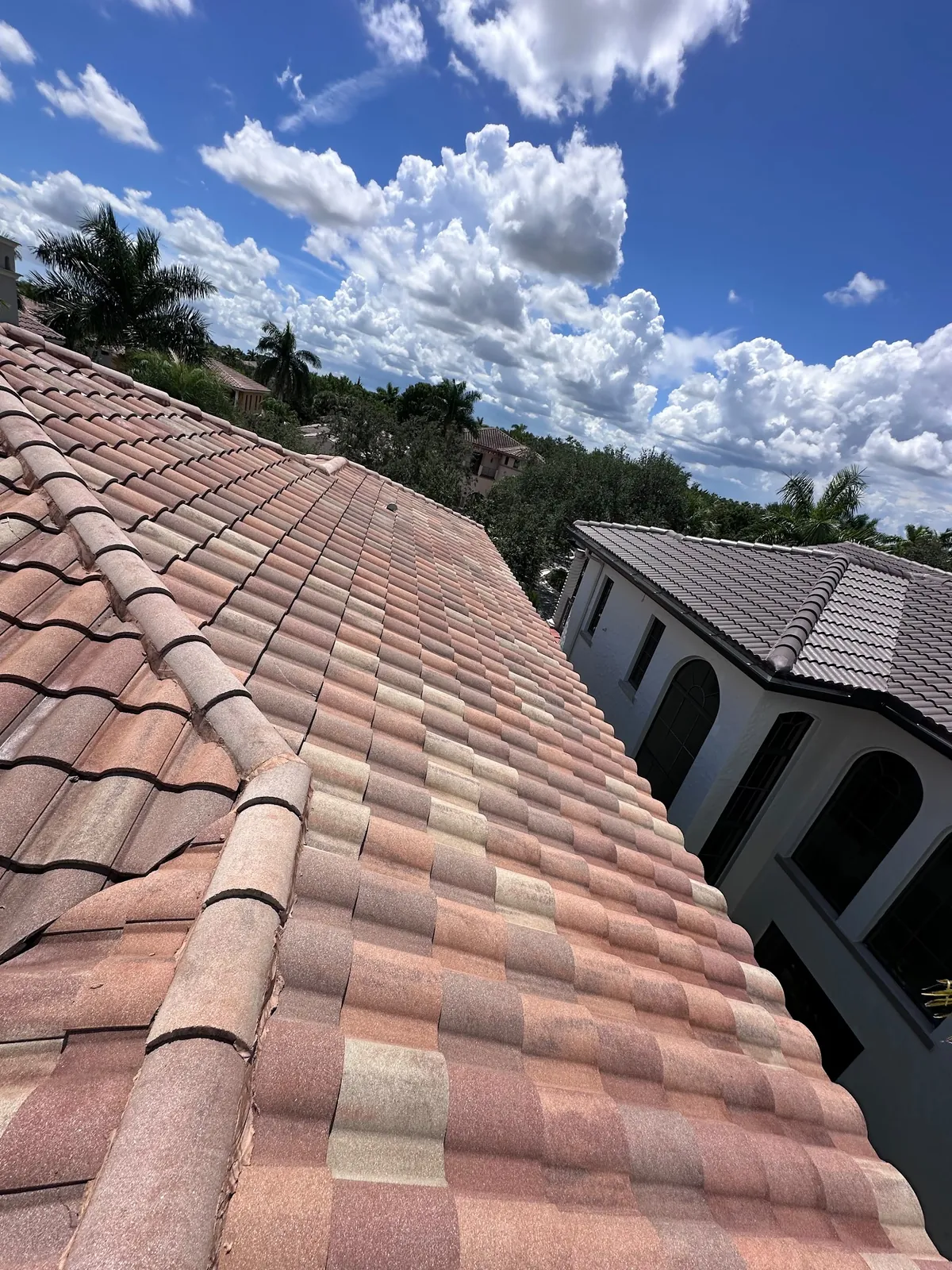
Concrete tile roofs from the 1980s, 1990s and early 2000s look much as they did when they were new. That is part of the trouble. The tile wears slowly, but the underlayment beneath it, the layer that really keeps the water out, wears faster in this heat. By the time a stain appears, the underlayment around it may have been failing quietly for a while.
A tile repair here usually involves lifting the tiles around the problem, checking and replacing the underlayment in that area, and refitting tile with fastening that meets current wind rules. If your roof’s tile is an older colour or profile, matching it can take some searching. Spare tiles left from the original build are worth keeping for exactly this reason.
One more cause is easy to overlook. Concrete tile breaks when it is walked on carelessly, and a roof that has had a satellite dish fitted, a solar array installed, an antenna removed or an attic fan replaced has usually had people on it who were not roofers. Cracked tiles often trace back to that visit, sometimes long after. If anyone has been on your roof for another trade, mention it. The roofer will look along the path they likely took, from the ladder point to the place they worked.
Shingle roofs and flat sections
Not every house in town is tiled. Shingle roofs are common too, especially on some of the earlier homes and on garages and additions. Shingles age differently. They lose their granules, the seal strip under each tab weakens, and wind lifts and tears the edges. Individual tabs can often be replaced if the rest of the roof is still supple. When the whole roof has turned brittle, spot repairs stop working.
Flat or low-slope sections over patios, Florida rooms and additions are a frequent leak point, because water sits on them. Seams and drains are the weak spots. The roofing pros in One Call’s network work on flat roofs too, so say which part of the house is leaking.
Where an addition meets the original roof
Houses built in the 1980s and 1990s have often been extended since: a family room pushed out the back, a garage converted and given a new roof line, a covered patio enclosed. Each of those changes left a joint where a newer roof ties into an older one. Those joints are some of the most common leak points on houses of this age.
The trouble is usually one of three things. The two roofs may have been built at different pitches, so water slows down where they meet. The flashing at the tie-in may have been done quickly, or with a different material from the original. Or the new section was roofed in a different tile or shingle, and the transition between them was never quite watertight. If your leak sits near a room that was added later, say so when you call. It points the roofer straight to the likely spot.
The parts that fail first
On a roof of this age, a handful of small parts cause a large share of leaks. They are worth knowing by name:
- Pipe boots. The rubber collar round each plumbing vent dries out and cracks, and rain runs straight down the pipe into the ceiling.
- Wall flashing. Where a lower roof meets a higher wall, the metal strip that sends water away can lift, rust or lose its seal.
- Valley flashing. The channel where two slopes meet carries a lot of water and wears quickly under debris.
- Penetrations. Exhaust fans, old satellite mounts and skylights are sealed once and often forgotten.
- The drip edge. If water is running behind the gutter, the fascia rots and the leak shows at the eaves.
These are usually small repairs when found early, and much larger ones once the deck underneath has rotted. They are a good reason for a planned look at the roof every so often.
Before the hurricane season
A roof that goes into the season sound is far more likely to come out of it sound. If a pre-season check appeals, booking ahead lets the roofer order any tile, the association sign off and the work happen without rain on the way. Ask for:
- Ridge and hip caps checked and reset where loose.
- Pipe boots and flashing inspected and replaced where cracked.
- Loose or cracked tiles replaced.
- Fascia and soffit repaired where soft.
- Gutters and the drip edge checked so water leaves the roof cleanly.
At home, keep the gutters clear and take note of anything in the yard that could be thrown by wind.
After the wind has passed
Once a storm has gone and it is safe outside, do the ground check again: every slope, every ridge, the fascia and gutters. Gather any debris from the roof and keep it. Keep an eye on ceilings over the next few days, since storm leaks do not always appear at once. Take dated pictures of all of it.
If the storm has opened the roof, the roofer can put a temporary tarp over the damaged area to keep the weather out while the repair is arranged. Leave that to the pro. A wet, damaged roof is no place to be.

Insurance records
The insurance claim belongs to you and your insurance company. The roofer documents; the adjuster decides. What the roofer can give you is the evidence: roof-level photographs plus a written note of what broke and how it was put right. Put those together with your own dated photos from the ground and inside. Read your policy for how it handles wind damage, and keep copies of any permit and final inspection.
Skylights and roof openings
Skylights, solar tubes and old roof vents are all holes in the roof, sealed with flashing and a kit around the curb. Over time the seals dry and the flashing lifts, and the leak shows on the skylight’s inner walls or the ceiling around it. Sometimes what looks like a leak is condensation instead, which is a different problem. The roofer can tell the difference, reseal or reflash the opening, and replace a cracked dome or a failed kit where needed.
Permits
Broward falls inside Florida’s High-Velocity Hurricane Zone, so every product on the roof, and the way it is fastened, must be approved for high wind. Anything past a minor fix goes through a building permit, which the licensed roofer pulls, and ends with an inspection. The city permit and your association’s approval are separate, and you may need both before work starts.
Gutters, trees and the roof edge
Where trees have grown up beside a house, leaves and small branches fill gutters, sit in valleys and hold water against the tile. Overhanging limbs scrape shingles in the wind and drop debris on the roof. Keeping branches trimmed back from the roof, and gutters clear, takes load off the roof and the fascia. Tree work is not a roofing job, but the roofer can tell you which branches are causing trouble.
Keep a file on your roof
A simple folder, paper or digital, makes every future decision about the roof easier. Keep in it:
- The year the roof was installed, if you know it, and the tile or shingle name and colour.
- Every repair, with the date, the roofer’s report and the photos.
- Permits and final inspection records.
- Any association approvals.
- Correspondence with your insurer about the roof.
When an insurer asks about the roof at renewal, when an association asks what was done, or when you sell, the answers are already in one place. It also lets the next roofer see the history of the roof before they climb it, which helps when the same area keeps giving trouble.
How One Call runs a roof repair in Cooper City
- Phone One Call or fill in the quote request with what you see, whether it is urgent, and the roof type if you know it.
- Mention your association, so the right paperwork can go to it.
- One Call picks a vetted local roofer who holds the licence and insurance your roof calls for and already works in Cooper City.
- The roofer inspects, shows you what they found and explains the repair.
- You ask what is included in the price and agree it before work starts.
- The repair is carried out, with a permit where needed. If water comes back, tell One Call and we follow it up.
Billing runs through One Call: the bill comes from One Call, and One Call settles with the roofer, so there is one company to deal with from start to finish.
If you are helping family close by, the same service runs through the Davie roof repair page and the Southwest Ranches roof repair page.
Questions from Cooper City
I have no leak yet. Is it worth calling?
Yes. A roof inspection before trouble starts can catch cracked boots, loose caps and failing flashing while they are still small repairs, and lets you plan the work for dry weather.
Will the HOA need to sign off on the repair?
It depends on your association. Many want to approve anything that changes the roof’s look. One Call can forward the roofer’s certificate of insurance and the forms the board requires.
How do I know if I need a new roof instead?
The inspection tells you. Widespread underlayment failure is the usual sign, and the roofer explains it with photos. Re-roofs are available through the same network, and so is financing.
Can roof repair in Cooper City wait until after the season?
Small, non-urgent items sometimes can. Anything letting water in, or loose enough to lift in wind, should be repaired first. The roofer will tell you which is which.
Arrange a roof check or a repair
Tell One Call what you have noticed and when suits you. One Call finds the right licensed roofer, vetted and insured, and looks after the job from there.