
A house on the water asks more of every small repair. Hinges and latches pit in the salt air, fine finishes show every careless mark, and the jobs run from the front door all the way down to the dock box. For a handyman in Lighthouse Point, One Call Home Pros takes the list and matches it with a vetted, insured local pro who works carefully around good materials and knows which hardware survives by the sea. The pro does the work. One Call arranges the visit, checks the pro and keeps the list moving until it is finished.
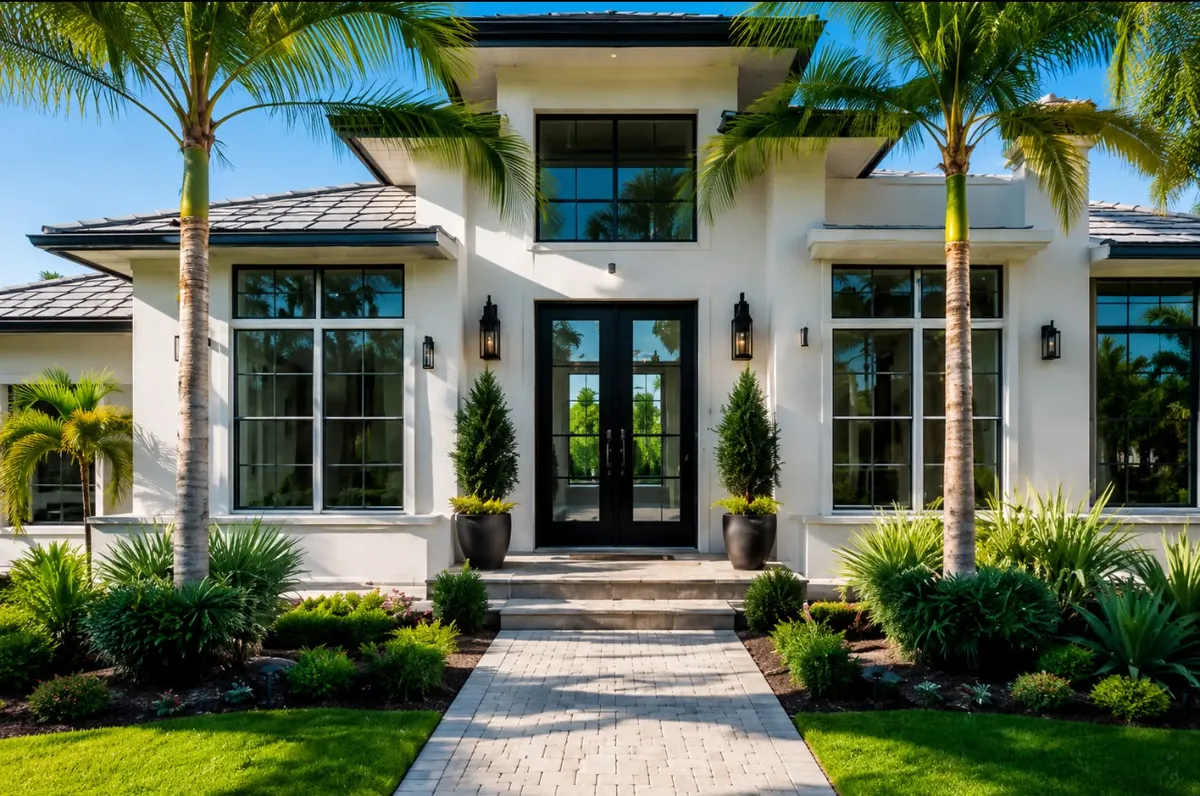
Why Lighthouse Point homes need a careful handyman
The city is small and almost entirely single-family, and nearly every street backs onto a canal or the Intracoastal. That puts salt air on every surface, all year. It also means a lot of the property sits at the water’s edge: docks, boat lifts, seawall caps, pool decks and outdoor kitchens.
Many of these houses carry higher-end fixtures and finishes than almost anywhere else in the county: solid wood doors, custom cabinetry, stone counters, designer hardware, premium paint and detailed trim. A repair has to match that standard. A patch that shows, a scratch in a lacquered door or a cheaper hinge swapped onto an expensive door is a poor result, even if it works.
So the work here is less about volume and more about care: the right material for salt exposure, protection for floors and finishes while working, and a finish that disappears into what is already there.
Handyman jobs on a waterfront house
Marine-grade hardware
Corroded hinges, latches, pulls and fixings replaced in stainless or marine-rated finishes.
Fine doors and millwork
Solid doors adjusted, custom trim and built-ins repaired and matched without visible joins.
Drywall and ceiling finish
Patches blended into smooth or textured finishes so they vanish under the existing paint.
Mounting and art
Large televisions, heavy mirrors and valuable artwork hung level and fixed for the weight.
Dockside small jobs
Dock boxes, hose reels, bench seats and loose deck boards on a dock, handled with stainless fixings.
Punch lists
Small items after a renovation, before guests arrive, or ahead of the season.
Salt and metal by the water
On a canal, salt air is a constant, and the metal in a house shows it first. Exterior door hinges streak rust down the frame. Gate latches seize. Brass and bronze finishes pit. Screws in outdoor cabinets, light shelving and pergola brackets swell and snap.
The material decides how long a repair lasts. A good pro uses:
- Marine-grade stainless steel for screws, hinges and brackets outdoors and near open doors.
- Matched metals, so stainless is not set into aluminium or galvanised steel where the two will corrode each other.
- Sealed fixings, with the screw holes in wood and composite sealed so water does not get in behind them.
- Coated or solid finishes for decorative hardware, rather than thin plating that wears through.
If you have particular hardware that matches the rest of the house, keep the brand and finish noted, or buy replacements in advance, so the pro fits the same pieces rather than the closest available.
Working around fine finishes
The difference between a good handyman visit and a poor one in a high-end house is often what happens around the repair. A pro working here should protect floors with runners and drop cloths, lift doors off onto padded supports rather than the stone, keep dust down with sheeting where drywall is sanded, and clean up as they go.
Matching is the other half. Custom trim is often a profile that no store carries. A pro can match it by combining stock mouldings, or by having a short length run to match, and then fill, caulk and paint so the new piece blends in. Painted cabinetry and doors are usually finished with a particular sheen and colour. Tell the pro what paint was used if you know, or let them take a sample from a hidden spot.
Stone, specialist finishes and glass are where a handyman should stop and ask. A cracked stone counter, a chipped glass shower panel or a damaged plaster feature wall needs a specialist in that material.

Doors that cost more to replace than to fix
Solid wood and fibreglass doors, tall interior doors and large double doors are heavy, and their weight tells on the hinges. Over time the top hinge pulls away, the door drops and the leading edge rubs the frame or the floor.
For an interior door, the pro sets longer screws through the hinges into the framing, adds a third or fourth hinge if the door is heavy enough to need it, and adjusts the latch and strike. A heavy pocket door that has come off its track can usually be lifted, the hangers adjusted and the track cleaned or replaced without opening the wall.
Exterior doors and big sliding glass doors facing the water get the worst of the weather. Weatherstripping, sweeps and threshold seals perish in the sun. Rollers on a large slider wear and the panel grinds. A handyman can replace seals, adjust rollers and fit new handles and locks in a marine finish. Replacing the door, the slider or a window is permitted work in Florida, usually with a rated product, and goes to a licensed contractor that One Call arranges.
On the dock and around the water
The dock is part of the house here, and it collects its own small jobs. Dock boxes lose their hinges and gas struts. Hose reels and cleats work loose. Bench seats and deck boards split or lift. Steps down to a floating dock or a boat lift wobble.
A handyman can replace hinges, struts and latches on dock boxes, refix loose benches and hose reels with stainless fixings, and replace individual split deck boards where the frame beneath is sound.
Larger work at the water is a different category. Dock framing, pilings, seawalls and seawall caps, boat lifts and their motors, and any electrical supply on the dock all go to licensed marine contractors and electricians. If a deck board is soft because the joist beneath it has rotted, that is a structural repair, and the pro will say so rather than cover it.
Built-ins, cabinetry and closets
Custom cabinetry is one of the things that sets these houses apart, and it is also where small faults are most visible. A soft-close hinge stops closing softly. A drawer on full-extension runners drops at the front. A tall pantry door twists slightly and no longer lines up with its neighbour. A shelf in a library wall bows under books.
These are adjustment jobs more often than replacements. Concealed hinges have screws to move a door in, out, up and sideways, and a pro can bring a row of doors back into an even line. Runners can be realigned or replaced with the same make. A bowed shelf can be stiffened with a hidden cleat or a support along its back edge.
Dressing rooms and large closets often have fitted systems with rods, shelves, drawers and lighting. The handyman can refix rods and shelves, replace broken supports and adjust doors and drawers. Lighting inside the closet, wired to the house, goes to a licensed electrician.
The garage and storage for boat gear
On a canal, the garage usually holds more than cars: fishing rods, dive gear, life jackets, coolers, lines and spare parts. Damp salt air reaches in there too, and steel shelving and hooks rust.
A handyman can fit wall shelving fixed into the block, rod racks, hooks and overhead storage using coated or stainless hardware, so it does not stain the walls or fail in a few seasons. A workbench with a pegboard above it keeps tools off the floor and dry. Tell the pro what will be stored and how heavy it is, so fixings and shelf spans suit the load. It is the kind of practical job a handyman in Lighthouse Point can add to any visit.
Garage door springs, cables and openers are under heavy tension and belong to a garage door specialist. New outlets or lighting in the garage go to a licensed electrician.
Mounting large and valuable pieces
Large televisions over fireplaces, oversized mirrors, gallery walls and heavy art all need careful fixing. A good mount starts with knowing the wall. Outer walls are usually block, and interior walls drywall on studs. Some houses have masonry fireplaces, stone cladding or plaster that needs its own technique.
The pro locates framing or solid block, uses fixings rated well above the weight, checks for pipes and wiring before drilling, and levels each piece. For artwork, a French cleat or a security hanger keeps a heavy frame flat to the wall and stops it lifting off. Tell the pro if a piece is valuable, so it is handled and hung with that in mind.
If the television needs a new outlet behind it, or low-voltage cabling run inside the wall to a new location, the outlet is a job for a licensed electrician. The mount itself, and surface cable covers, are handyman work.
Outdoor living by the canal
Waterfront houses spend a lot of time outside: covered patios, summer kitchens, pergolas and pool decks. Small parts of these spaces need regular attention:
- cabinet doors and drawers in an outdoor kitchen that swell or lose their hinges
- pergola and shade-sail brackets that rust and work loose
- wooden benches, planters and privacy screens that split in the sun
- gate latches and hinges on a pool gate, which must close and latch on their own
- screen enclosure doors whose closers and handles fail
A handyman can deal with all of these using stainless and outdoor-rated materials. A pool gate is worth extra care: after any change, it should still close and latch by itself every time. Screen enclosure frames, pool equipment, gas lines to a grill and any outdoor wiring belong to the right licensed trades.

After a renovation
Larger renovations are common on houses of this standard, and when the contractors leave there is always a list of small things: a cabinet door out of line, a scuffed wall, a missing door stop, trim not quite meeting, a closet rod not yet fitted.
A punch list visit after a renovation is a good use of a handyman in Lighthouse Point. The pro works through the list item by item, matches materials to what the renovation used, and leaves the rooms finished. If anything on the list belongs to the original contractor under the builder’s or installer’s warranty, raise it with them first.
Before the season, and before a storm
A house that is closed for part of the year, or one on the water facing a storm season, benefits from a careful pass:
- Walk the exterior and the dock, and list anything loose, rusted or rattling.
- Check exterior doors and sliders seal and lock properly.
- Secure or store outdoor furniture fixings, dock boxes and anything that could lift in wind.
- Look for split caulk around doors and windows on the water side.
- Note anything beyond handyman scope for a licensed trade.
Shutters, impact glass and any roof work are not handyman items. Installing or changing shutters needs a permit and a licensed contractor, and roof work goes to a licensed roofer. If a storm has already caused damage, photograph it first and call One Call so each part is matched to the right pro.
Drywall and ceilings in larger houses
Bigger rooms and taller ceilings make a drywall repair harder to hide. Light travels further across a long wall, and a ceiling patch in a double-height room is lit from every side.
A pro working in a large space feathers each patch wide, uses several thin coats, and sands under raking light so the edges cannot be seen. Textured ceilings are matched with the same technique as the original. Where a high ceiling needs a tall ladder or scaffold, mention the height when you book so the right equipment arrives. Water stains on a ceiling under a balcony or a bathroom need their source found by a plumber or roofer before the patch.
When you are away from the house
Waterfront houses are often left for weeks at a time, and small repairs do not wait. A gate latch fails, a slider seal lets rain in, or a dock box lid blows open.
A handyman visit can be arranged while you are away, provided someone can let the pro in, such as a house manager, a neighbour with a key or a family member. Explain the arrangement when you book, list exactly what you want done, and ask for photos of each item before and after. If the pro finds something outside the agreed list, it comes back to you as a note first rather than being done without your say.
Anything the pro sees that needs a licensed trade, such as a stain on a ceiling or a dock board over a soft joist, is reported to you in the same way, so One Call can arrange the right professional.
Where a licensed trade takes over
Florida has no state handyman licence, so a handyman takes on minor, non-structural work only. On a waterfront house, these belong elsewhere:
- Docks, pilings, seawalls and boat lifts: a licensed marine contractor.
- Outlets, lighting, fans and dock power: a licensed electrician.
- Fixtures, valves and pipes, including outdoor kitchens and showers: a licensed plumber.
- Gas to a grill, fire feature or pool heater: a licensed gas professional.
- AC and ventilation: a licensed HVAC professional.
- Roofs, shutters, windows and exterior doors that need a permit: a licensed roofer or contractor.
Include them on the list. One Call matches the handyman items with a vetted handyman and each trade item with a licensed pro, all from one call.
Booking and paying
Call or use the quote page, describe the house and the list, and send photos. If you have preferred hardware or paint, say so. One Call matches you with a vetted, insured handyman and arranges any licensed trades the list needs.
You pay One Call, and One Call pays the pro. Ask what the price covers before the work begins, including materials. For a larger scope, such as refitting doors and hardware through the whole house, financing is available; ask about it when you call. If anything does not hold, call One Call and it is followed up.
Questions from Lighthouse Point
Will a handyman in Lighthouse Point use marine-grade hardware?
Ask for it when you book. Stainless steel fixings and marine-rated finishes are the right choice outdoors and near the water, and the pro can bring them or fit hardware you have bought.
Can a handyman repair my dock?
Small items, yes: dock boxes, hose reels, benches and individual deck boards on a sound frame. Pilings, framing, seawalls and boat lifts go to a licensed marine contractor.
Can a handyman match my custom trim?
Usually. A pro can combine stock mouldings or have a short length made to match, then fill and paint so the join does not show.
Can a handyman install new shutters?
No. Shutters usually need a permit and a licensed contractor. One Call can arrange that alongside any handyman work.
Send the list for the house and the dock
From the front door to the dock box, send the whole list with photos. One Call matches the handyman work with a vetted, insured local pro and any trade work with a licensed professional. The same service runs for handyman work in Deerfield Beach and handyman service in Pompano Beach, and the handyman service page describes the trade in general. To book a handyman in Lighthouse Point, start on the quote page.