
The first thing most people want to know about a leaking roof is what it will cost, and the honest answer is that nobody can say until a roofer has seen where the water gets in. What you can count on is knowing the price before anything starts. For roof repair in Lauderdale Lakes, One Call Home Pros sends a vetted, licensed and insured roofer to find the cause, explain it in plain terms and put a price on the fix. You agree it, or you do not. One Call is a connector and holds no roofing licence: the roofer does the work, and we organise it and keep track of it.

Why Lauderdale Lakes homes need roof repair
Lauderdale Lakes is a small city, closely built, and most of it went up in the 1960s and 1970s. A high share of the housing is multifamily: garden apartment buildings, duplexes, small blocks of four or eight units and condominium complexes, alongside single-storey houses on compact lots.
Buildings from that period were often given flat or very low-slope roofs, especially the multifamily ones. Those roofs have had several coverings since, but the drains, the parapet walls, the deck underneath and the details at the edges have been there the whole time. Decades of heavy summer rain, hot sun and storm seasons find every weak spot.
The age of the housing shapes what a roofer finds. It also shapes what a sensible repair looks like. On an older roof with a single fault, a targeted repair is often the right answer. On one that has been patched many times, the pro should tell you honestly whether more patching is worth it.
Repairs a roofer can price for you
Leaks through the ceiling
A drip, a stain or wet drywall, tracked back to its source on the roof.
Broken or missing tile
Cracked concrete tile and gaps left where wind has carried pieces off.
Loose shingles
Tabs that have lost their seal, curled corners and torn pieces after wind.
Flashing and pipe collars
Failed metal at walls and parapets, and cracked boots round plumbing vents.
Rotted fascia and soffit
Roof-edge boards gone soft and panels hanging loose under the eaves.
Storm records for your insurer
Photos and written findings after wind damage.
How the price is worked out
Every roof repair is priced on what the roofer finds, so it helps to know what moves it up or down. None of this is a number. It is what to ask about.
- What the roof is made of. Tile, shingle and flat roofs each take different materials and methods.
- How far the damage has spread. A single cracked boot is a small job. Water that has run along the deck for months may have softened wood that has to be replaced.
- Access. A single-storey house is simpler to work on than a two-storey building with no clear spot for a ladder.
- Whether a permit is needed. Larger repairs need one in Florida, along with an inspection.
- Matching materials. Older tile profiles can be hard to find.
When the roofer gives you the price, ask what it covers: which area, what materials, whether any rotted wood is included or would be extra, and whether the permit is part of it. You pay One Call, and One Call pays the roofer, so if anything about the bill is unclear afterwards, there is one place to ask.
Fix what matters first
If money is tight, it is fair to ask the roofer to separate what needs doing now from what can wait. An active leak over a bedroom, an open hole after a storm or a sagging soft spot in the deck come first. Worn sealant on a flashing that has not leaked yet, or a few faded shingles, can often be planned for later.
Ask the pro to say which items are urgent and why, and to price them separately where that makes sense. Then you can decide with all the facts. Financing is available for larger roof work as well; ask about it when you call.
What not to do is leave an active leak because the full job seems too big. Water in the deck spreads, and the repair you put off is usually the more expensive one later.
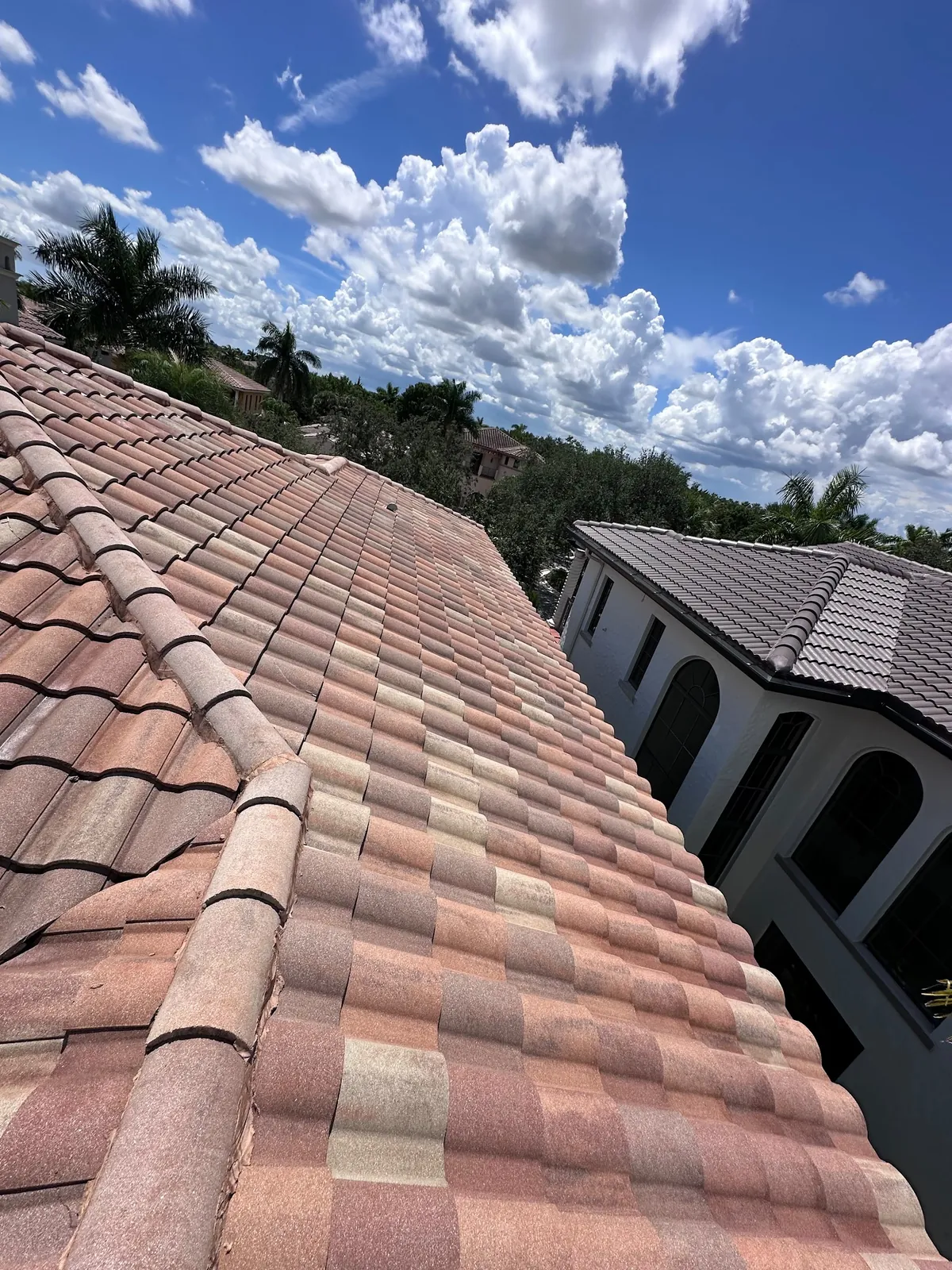
Flat roofs on older buildings
Flat and low-slope roofs are common here, especially on apartment buildings, duplexes and the back additions of single-storey houses. They are never truly flat. They are built with a gentle fall towards drains or scuppers at the edge. Over decades, decks sag, drains silt up and the fall is lost, and water sits on the roof after rain.
Standing water is the enemy of a flat roof. It finds every seam and every crack, and it keeps working on them for days after the rain stops. Signs you may have a ponding problem:
- Rings of dirt or algae on the roof where puddles dry out.
- Leaks that appear a day or two after rain rather than during it.
- Water marks on the outside wall below a scupper.
- Plants growing in debris near a drain.
The roofer clears the drain, finds where the water is getting through, and repairs the membrane or built-up layers. If the deck has sagged, they may suggest building up the low area so water runs off again. Ask what each option involves.
Tar and gravel, and what has replaced it
Many buildings from the 1960s and 1970s were roofed with built-up layers of felt and tar, finished with gravel. Some still are, and others have since been covered in modified bitumen or a single-ply membrane. Each one fails in its own way. Built-up roofs blister and crack. Modified bitumen opens at the seams. Membranes split at corners and around pipes.
You do not need to know which you have. If you can, take a photo of the surface from a window or the top of a ladder held by someone else, and tell One Call. The pro will identify it on arrival, and the repair has to suit the material already there.
Duplexes and small apartment buildings
If you own a duplex or a small building of a few units, you are probably both the owner and the person who arranges every repair. A roof leak there affects more than one household at once. When you call, tell One Call:
- How many units the building has and which ones show water.
- Whether the roof is one continuous surface or split between sections.
- Who will let the roofer in, and whether the roof is reached by a hatch, a fixed ladder or only from outside.
- Whether any tenant has reported water near a light or an outlet.
Tenants should hear in advance that a roofer is coming. On a building like this, it is often worth having the whole roof looked over while the pro is there, rather than just the corner over the unit that called.
Condominium complexes
Some of the multifamily housing here is condominium. In a condo, the roof is normally the association’s responsibility, not the owner’s. If water comes into your unit from above, report it to the manager or the board in writing, with dated photos, and keep a copy.
If you serve on the board or manage the property, the roofing pros One Call works with handle flat roofs and condo work. One Call can send the roofer’s insurance certificate and the approval paperwork to the association, so the board has what it needs before work begins. Describe the buildings, the roofs and the problem when you call.
Single-storey houses
The single-storey houses in Lauderdale Lakes are mostly block-built with stucco walls, with tile or shingle roofs and often a flat-roofed section at the back: a Florida room, a carport enclosed years ago, or a laundry. That join between the pitched main roof and the flat back section is one of the commonest leak points on these houses. Water running off the main roof lands on the flat section and has to get past the flashing where the two meet.
If your stain is near the back of the house, at the junction of an old addition, mention it. It points the roofer straight at the likely spot.

Vent pipes, walls and the metal on the roof
Even on a modest house, a roof is full of openings and joins. Plumbing vents come up through it, each sealed with a rubber boot that cracks in the sun. Walls and parapets meet it, each sealed with flashing let into the stucco. On older buildings the stucco has cracked and the flashing has rusted. On a flat roof, the edge metal and the parapet cap are just as important.
Most roof repair in Lauderdale Lakes involves one of these details rather than the whole covering. That is good news, because a failed boot or a single run of flashing is usually a contained repair. The roofer replaces the failed part rather than smearing more sealant over it.
Why the drip is not always under the hole
On a flat-roofed building there is often no attic, just a shallow space between the roof deck and the ceiling below, sometimes with the ceiling fixed straight to the joists. Water that gets through the roof runs along the top of a joist or the underside of the deck before it finds a place to drop. So the stain on your ceiling can be some way from the actual opening in the roof.
That is one reason a roofer needs time to trace a leak properly on these buildings. They look for the low point the water is running towards, for wet insulation, and for marks on the roof surface upslope of the stain. On a pitched roof with an attic, the pro may also look from inside with a torch, following the water trail along the rafters. Give them access to any hatch, and clear a path to it before the visit.
Keeping an older roof going
A modest amount of care keeps an ageing roof working longer and keeps repairs small. None of it needs you on the roof:
- Keep drains and scuppers clear. On a flat roof, ask whoever looks after the building to check them before and during the rainy months. Leaves and grit block them quickly.
- Trim branches back. Limbs rubbing on a roof wear through shingle and membrane, and drop leaves into gutters and drains.
- Watch the ceilings. A new stain caught early means a smaller repair. Mark its edge in pencil so you can see whether it grows.
- Look after storms. Walk round the outside and look up. Missing pieces are easy to spot from the ground.
- Keep a record. Note each repair, the date and the area. It shows the next roofer what has failed before.
Small steps like these are not a substitute for a roofer when water gets in. They do help you catch problems while the fix is still a small one, which matters most when you are keeping a close eye on spending.
The roof edge
Fascia boards rot when water gets behind them, usually from a gutter that overflows or a drip edge that has rusted away. Soffit panels warp and drop. Once there is a gap, rain blows in and rats and birds follow. The roofer replaces rotted fascia and refits soffit. If the gutters are part of the problem, ask whether clearing or rehanging them is included or is a separate job.
When a storm has been through
Once it is safe outside, look at the roof from the ground and note what is missing or out of place. Keep any roof material that has come down. Check every ceiling for a few days. If the roof has been opened up, the roofers One Call works with can put a temporary cover or tarp over it to keep the rain out until the repair.
For an insurance claim, take your own dated photos, and ask the roofer for photos from the roof and a written account of what was damaged and what the repair involves. The roofer does not handle the claim for you, but that record is what the insurer will ask to see.
Repairing, or replacing
Sometimes the honest answer is that a roof has reached the end. If the pro finds the deck soft in many places, the covering failing across the whole roof, or a flat roof holding water everywhere, they will tell you. The roofers One Call works with also do full re-roofs, so you can get a price for both and compare. Financing is available for that kind of work; ask about it when you call. A good pro explains why, shows you what they saw and leaves the choice with you.
Water near lights and outlets
On older buildings, roof water often finds its way to a ceiling light, a fan or a smoke alarm, because the fixing hole gives it an easy path through the drywall. If water is dripping from a fitting, or a ceiling around one is wet, turn that circuit off at the breaker and do not touch the fitting. Tell One Call when you call, and tell the roofer when they arrive.
Once the roof is repaired and the ceiling has dried, have the fitting checked before you switch the circuit back on. That is a job for an electrician rather than a roofer, and One Call can arrange one separately if you need it. In a rented unit, the tenant should tell the owner straight away if water reaches any fitting, and the owner should treat it as the most urgent item on the list.
Permits
Small fixes are just that. Larger repairs, such as replacing a section of roof covering and underlayment, need a building permit and an inspection in Florida, and Broward’s wind requirements are strict. The licensed roofer applies for the permit. Ask whether the price includes it.
From your call onwards
When you call about roof repair in Lauderdale Lakes, tell us where the water appears, what kind of building it is and who will be there. One Call matches a vetted, licensed and insured roofer who covers the city. The roofer inspects, explains what is wrong and gives you the price. Nothing starts until you agree. If the leak returns after the repair, call One Call and we raise it with the roofer.
The same service is arranged next door, through roof repair in Lauderhill and roof repair in North Lauderdale.
Questions from Lauderdale Lakes
How much will my roof repair cost?
That depends on what the roofer finds: the roof type, how far the damage goes, access and whether a permit is needed. You get the price before any work starts, and you can ask exactly what it covers.
Can I fix only the urgent part now?
You can ask. Have the roofer separate what needs doing now from what can wait, and price them separately where that makes sense. An active leak should not wait.
My flat roof holds water after rain. Is that a problem?
Yes. Standing water works on seams and cracks long after the rain stops. The roofer clears the drains, finds the leak and can suggest ways to get water running off again.
Is financing available?
Yes, for larger roof work. Ask about it when you call. The details are discussed with you then.
Find out what it needs
Roof repair in Lauderdale Lakes starts with finding the cause. Tell us where the water shows, and One Call arranges a vetted, licensed roofer and a clear price before anything begins.