
Start with the water. Catch it, keep people and electrics away from it, and take a dated photo. Then tell One Call Home Pros where it shows and what kind of home it is. For roof repair in Deerfield Beach, we pair you with a vetted, licensed and insured roofer from the area, who climbs up, tracks the water to its source and talks you through the fix before any work begins. One Call does not hold a roofing licence and does not do the work. We set it up, check the pro and keep an eye on the job until the ceiling stays dry.

Why Deerfield Beach homes need roof repair
Deerfield Beach sits at the north end of the county’s coast, and its housing falls into rough bands. Along the east side, close to the ocean and the Intracoastal, roofs live in salt air. Inland of the beach there is a large stock of older condominiums, many of them low-rise and mid-rise buildings with flat or low-slope roofs maintained by an association. West of those, the city turns to single-family streets with tile and shingle roofs.
Across all three bands, the housing is ageing. Roofs, flashing, decking and drains that were sound when they went in have been through many summers of sun, heavy rain and storm seasons. Near the water, the salt speeds up the wear on every piece of metal.
So the right roofer for a leak here depends on which kind of building you are in and how close it is to the ocean. A condo board with a ponding flat roof, an owner with a corroded flashing near the beach and a family with cracked tile further west need different things from the same call.
Roofing work arranged across Deerfield Beach
Leaks you can see
A drip, a stain or a wet wall, traced from the inside back to the point where water gets in.
Tile cracked or gone
Concrete and clay tile broken by wind or foot traffic, or missing after a storm.
Shingles lifted or torn
Tabs that have lost their grip, creased in wind, or worn thin by sun.
Flashing and vent boots
Corroded metal at walls and valleys, and dried rubber collars round vent pipes.
Eaves, soffit and fascia
Rotted boards and sagging panels along the roof edge, letting in rain and pests.
Wind damage and claims
Photos and written findings for your insurer after a storm.
Where your home sits makes a difference
When you call, two facts help more than anything else: the type of building and roughly how far it is from the water. Tell us whether it is a house, a townhouse or a condominium, and whether you are near the beach, near the Intracoastal or further inland.
Those two answers shape the match. They tell One Call whether the job is a pitched tile roof or a flat membrane, whether an association needs to approve the work, and whether the pro should expect salt damage to the metal. They also tell the roofer what to look at first when they arrive.
Salt air on the east side
Closer to the ocean, the roof covering is rarely what fails first. The metal does. Flashing at the walls, drip edge along the eaves, valley metal, vent caps, nails and tile fasteners all corrode in salt air, and galvanised coatings wear through sooner than they would a few miles inland.
What that looks like on a roof:
- Rust streaks running down from a wall flashing or a vent cap.
- Tile that rocks or slides because the fastener holding it has corroded.
- Rusted gutter brackets letting the gutter droop, so it spills against the fascia board.
- Pinholes in flashing that let water through in every rain, not just storms.
On an east-side roof the pro gives the metal the closest look, and where it has to be renewed may propose a metal better able to cope with salt. Ask what they plan to use and why, and what the difference means for how long the repair should last.
Older condominiums inland of the beach
A large share of Deerfield Beach housing is older condominium stock: garden-style and low-rise buildings grouped round parking and pools, and taller buildings closer to the water. Most of them are topped by flat or nearly flat roofs, finished in built-up layers or a membrane, edged by parapets and dotted with drains, scuppers and mechanical units. Some older buildings also carry a steep mansard facade of shingle or tile around the top, which is a roof in its own right and leaks like one.
These roofs age in their own ways. Water ponds where the deck has sagged or a drain has silted up. Seams open in the heat. Parapet caps crack and let water run inside the wall. Every pipe and every equipment support passing through the roof relies on a seal, and the sun hardens each one.
If you own a unit
The roof over a condominium is nearly always a common element, the association’s to maintain. When water reaches your unit from above, put it to the manager or the board in an email or letter, attach photos showing the date, and keep your own copy. Note when it leaks and in what weather. Your unit may need its own repairs to drywall and finishes once the roof is sorted, and your own policy may cover some of that, so check it.
If you sit on the board or manage the building
The roofing pros One Call works with take flat roofs and condo jobs, high-rise buildings included. Ring us with the details: how tall the building is, what covers the roof, how it drains, what equipment sits up there and what has gone wrong. One Call can send the pro’s certificate of insurance and the approval paperwork to the association, so the board has what it needs before work starts.
Single-family streets to the west
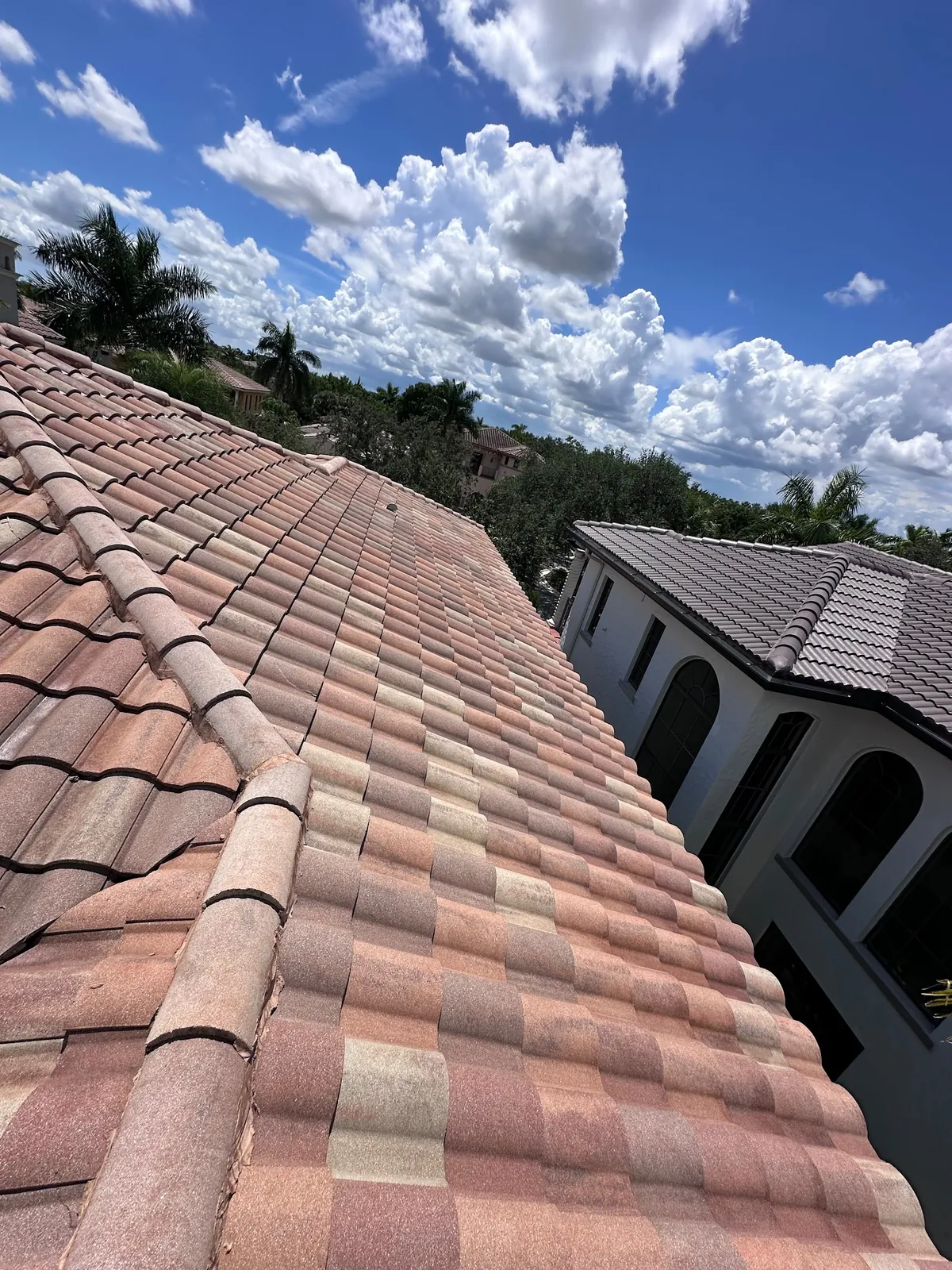
West of the older condo belt, Deerfield Beach is mostly single-family housing: single-storey and two-storey homes, many with concrete tile, some with shingle, and a fair number with additions, Florida rooms and covered patios built on over the years. These homes are further from the salt, but they are not young, and their roofs show it.
Roof repair in Deerfield Beach on these streets usually comes down to a familiar list:
- Underlayment beneath tile that has dried out and cracked, so a broken tile turns into a leak.
- Valleys where two slopes meet, carrying a lot of water and collecting leaves.
- Joins where an addition’s roof meets the original house, often at a lower pitch and with flashing put in by hand.
- Vent boots cracked in the sun.
- Soft decking near the eaves where gutters have overflowed for years.
Tell the pro if the house has had additions, and roughly where. Joins between old and new roofs are among the most common sources of a leak that nobody can find.
Patio roofs and screen enclosures
Many houses here have a screened pool enclosure or an aluminium patio roof fixed to the house at the fascia. Where that roof meets the house, water can run back along the fixings and into the eaves. A leak that shows on an inside wall next to the patio door may come from this join rather than the main roof.
The roofer can deal with the house roof and its edge where the patio roof meets it. The enclosure or patio roof itself may be a separate trade. When you call, mention that it is there and where the water shows, and ask the pro where their work stops.
Leaks that come with the wind
In a coastal city, plenty of leaks wait for one kind of storm. An onshore blow pushes rain sideways, up beneath tile laps, in behind wall flashing and through openings at the ridge that stay dry when rain falls straight down. If your ceiling only marks when weather arrives from the east, look to the east-facing slopes.
Keep a short record: the date, the wind direction if you know it, and where the water appeared. It narrows the search and shortens the time the pro spends on the roof looking.

What age does to each part of the roof
Whatever its covering, an older roof has parts that wear at different rates:
- Underlayment. The layer beneath tile or shingle that actually keeps water out. It dries and cracks with heat and age, and once it fails, every gap above it becomes a leak.
- Decking. Plywood or boards that soften where water has been getting in slowly. Soft deck does not hold new fasteners.
- Flashing. Metal that corrodes, lifts or loses its seal against the wall.
- Sealants. Caulk and roofing cement that shrink and crack in the sun, often the first thing to go.
- Penetrations. Vents, skylights, satellite brackets and AC lines, each a hole in the roof with a seal that ages.
A good repair looks past the obvious fault to whichever of these let the water through. Ask the pro to tell you what they found underneath.
Once a storm has passed
Wait until the weather has fully cleared, then walk round the outside and study each slope from the yard and the street. Count what is gone or out of place: tiles, shingle tabs, ridge pieces, flashing, soffit. Pick up roof material from the lawn and set it aside. Inside, check every ceiling over the next few days, because water soaked into insulation can take a while to come through.
Where the storm has left the roof open, the roofers One Call works with can fit a temporary cover or tarp that keeps the weather out until the permanent repair. Stay on the ground. A coastal roof after rain is slippery, and gusts off the water make any ladder risky.
Building a record for a claim
The claim itself is between you and your insurer, and a roofer does not adjust claims. The roofer can, though, supply the evidence nobody should climb up to collect: pictures taken on the roof and a short written account of what broke and what was done about it. Keep those together with your own photos from the yard and the rooms below. For a condominium, the association claims for the roof under its policy, and the inside of your unit falls to yours.
Permits and the wind rules
Some jobs are small, such as swapping a cracked boot round a vent pipe. Others, such as relaying an area of tile with new underlayment, require a building permit and an inspection under Florida rules, and coastal Broward sits under some of the toughest wind standards anywhere in the state. The licensed roofer files for the permit and books the inspector.
Matching tile on an older house
Concrete tile profiles and colours change over time, and some that went on older houses here are no longer made. When a few tiles break, finding exact matches can be the hardest part of the repair. Pros have a few ways round it. They may find a close match from a supplier, or take sound tiles from a slope that cannot be seen from the street, use them on the visible repair and put the nearest match on the hidden slope instead.
If you have spare tiles left from an earlier job, perhaps stacked in the garage or beside the house, tell the pro. They can save a lot of searching. If the colour of a new tile will differ slightly from the faded ones around it, ask to see it before it goes on.
Two-storey homes and ladder work
Some of the newer single-family homes west of the older core rise to two storeys, and some older ones have had a second floor added. A second storey changes how a roofer works. Ladders are taller, so they need firm, level ground and a clear spot away from pool decks, planting and screen enclosures. Lower roofs over porches or garages are often reached from the upper roof, or the other way round.
If the leak is on a lower roof tucked under the upper wall, say so. That join between a low roof and the wall above is a common leak point on two-storey homes, because water running down the whole height of the wall reaches the flashing at the bottom.
Before storm season
A short look at the roof from the ground before the storm months can head off a leak. You do not need to climb. From the yard, look for:
- Tiles that sit out of line with their neighbours, or are cracked across.
- Shingle tabs that curl at the corners or lie loose.
- Rust stains on stucco below any flashing.
- Gutters full of leaves or pulling away from the fascia.
- Branches resting on or hanging over the roof.
If anything on that list turns up, it is easier to arrange a repair in calm weather than after the first storm has turned a loose tile into a wet ceiling.
How One Call arranges it
Ring One Call or send the quote request, saying where the water appears, what sort of building it is and its distance from the ocean. We pick a vetted roofer, licensed and insured for that type of roof, who covers Deerfield Beach. The roofer looks the roof over, sets out the fault and the fix, and nothing begins until you have agreed the price. When the repair calls for a permit, the roofer obtains it.
You settle the bill with One Call, and One Call settles with the roofer, so there is a single name to deal with from start to finish. Before work begins, find out exactly what the price includes, corroded metal especially. Financing is available for bigger roofing jobs; mention it on the phone. Where the roof is worn out beyond patching, the pro says so plainly, and the roofers One Call works with also do full re-roofs.
Should a drip come back with the following downpour, let One Call know and we raise it with the roofer. Roof repair in Deerfield Beach is handled the same way along the coast on either side, through roof repair in Hillsboro Beach and roof repair in Pompano Beach.
Questions from Deerfield Beach
My top-floor condo has a leak. Do I hire a roofer?
Go to the association first, in writing and with photos attached. The roof belongs to the building as a whole, so the association organises the work. Board members and managers can call One Call with the building’s details.
Why does the metal on my roof keep failing?
Near the ocean, salt air corrodes flashing, fasteners, drip edge and gutters faster than inland. Many leaks on the east side start at the metal rather than the tile.
My leak only shows in storms from one direction. What does that mean?
Wind is driving rain under tile or behind flashing on that side. Note the wind direction and where the water appears. It points the pro to the right part of the roof.
Can the same roofer look at the join with my patio roof?
The roofer can deal with the house roof and its edge where the patio roof is fixed. The patio roof or screen enclosure itself may be a separate trade, so ask where the work stops.
Have the roof checked
Say where the ceiling is marked, what kind of building you are in and how near it is to the ocean. One Call arranges roof repair in Deerfield Beach with a vetted, licensed roofer and stays with it to the end.