
A new air conditioner near salt water, or in a house built before central air was normal, needs more thought than a straight swap in a modern subdivision. AC installation in Dania Beach differs between the city’s older homes and its newer ones, and it changes again when the property sits close to the Intracoastal. One Call Home Pros does not do the installation and holds no HVAC licence. We put you in touch with a vetted local HVAC professional, licensed and insured for the work, who handles older and coastal homes regularly. That professional installs the system; One Call vets them, books the visit and keeps watch over the job until the inspection is passed.
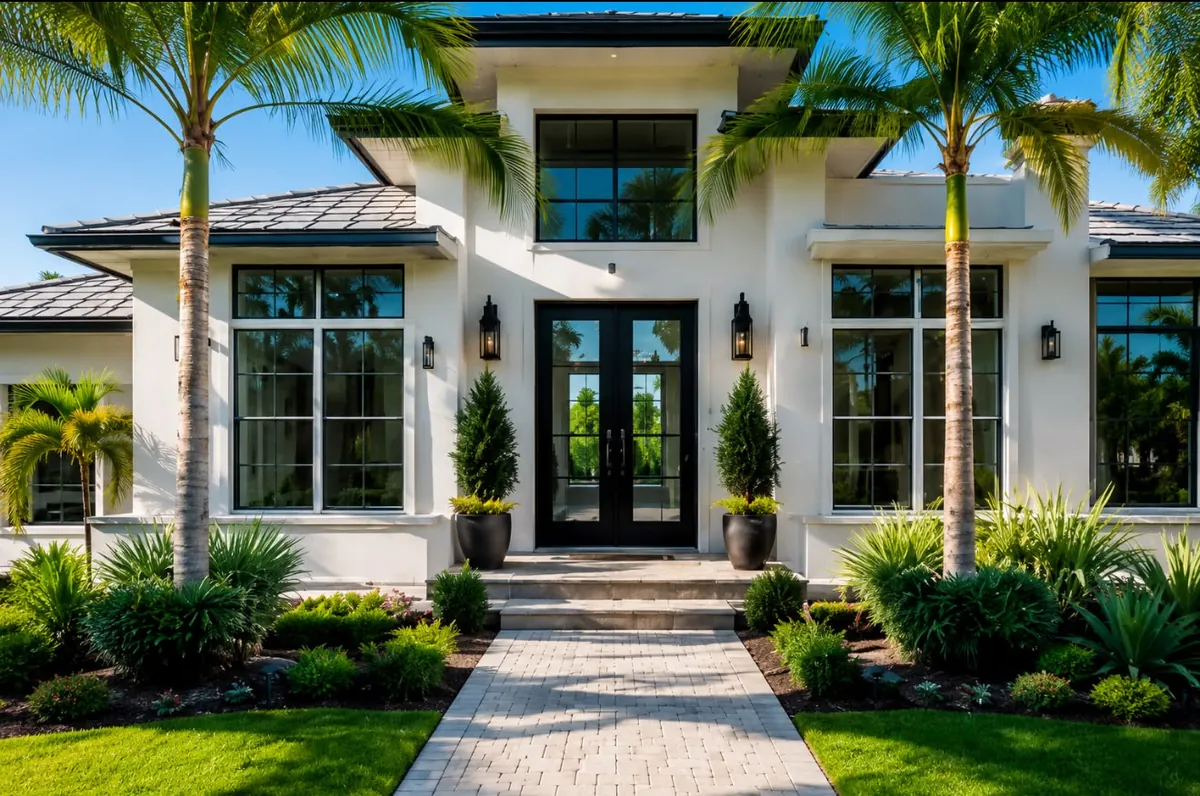
Why Dania Beach homes need installations matched to age and salt
Dania Beach is old Broward. Its historic core is made up of early and mid-century houses, many of them small block or frame homes built long before anyone expected central air. Along the water, marine businesses, boatyards and docks line the Intracoastal, and newer townhomes and condos are being built in between.
That mix produces very different air conditioning jobs within a short drive of each other. An older cottage may have window units, a wall unit, or a central system squeezed in decades after it was built, with ducts in a shallow attic or none at all. A newer townhome may have a modern split system that simply needs replacing at the end of its life.
What both share, near the water, is salt. Salt-laden air settles on outdoor coils and fasteners and corrodes them faster than inland. Equipment choices, placement and maintenance all need to allow for it.
What an installation here can cover
Coastal-ready outdoor units
Coil protection, coated cabinets and corrosion-resistant fasteners to discuss for homes near salt water.
Central air for older houses
Adding ductwork where the house never had it, or replacing a system squeezed in decades ago.
Ductless systems
Wall or ceiling units with a single outdoor unit, for homes with no room for ducts.
Electrical capacity
The breaker, wiring and disconnect checked against the new equipment, with an electrician where the panel is old.
Raised and anchored pads
Outdoor units set to stay put in high wind and clear of standing water.
Permits and inspection
The licensed contractor files the permit; an inspector checks the work.
Is it repair or replacement?
Before anything else, it helps to be clear about whether your system actually needs replacing. Many faults are repairs: a failed capacitor, a burnt contactor, a blocked condensate line. Near the water, though, corrosion changes the picture. When salt has eaten through the fins and tubing of the outdoor coil, refrigerant leaks start and keep coming back. Patching a badly corroded coil rarely lasts.
Replacement is worth serious thought when:
- The outdoor coil is visibly corroded, with flaking fins or green and white crust on the copper
- Refrigerant has been added more than once in recent years
- The compressor has failed on an old unit
- The cabinet, base pan or fasteners have rusted through
- The system runs on a refrigerant that is no longer produced
- Rooms feel damp and never quite comfortable
The contractor will look at the whole system and give you their view. The decision is yours.
Salt air and the outdoor unit
Salt spray and sea air carry fine particles of salt inland, especially on breezy days and after storms. They settle on the outdoor coil, mix with moisture and slowly corrode the aluminium fins and copper tubes. The closer the house is to the Intracoastal or the ocean, the faster it happens.
When choosing new equipment for a coastal home, ask the contractor about:
- A factory-applied or aftermarket protective coating on the outdoor coil
- A coated or painted cabinet and a corrosion-resistant base pan
- Stainless steel or coated fasteners and brackets
- Where the unit can sit to be sheltered from the prevailing wind off the water
Some manufacturers set conditions on their manufacturer’s warranty coverage for units installed close to salt water. Ask the contractor what applies to the equipment they quote, and keep the paperwork.

Adding central air to an older house
Some of the oldest homes in Dania Beach were never built for ducted air conditioning. They may rely on window units, a through-wall unit or two, or nothing at all. Installing central air in a house like that is a larger project than a replacement, because the ducts have to be added.
The contractor will look at where ducts could run. A house with an accessible attic may take a conventional system, with the air handler in a closet or the attic and supply grilles in each room. Low-pitched roofs and shallow attics make that harder. A house built on a raised floor may offer space underneath, though that space has its own problems with moisture and access.
Where ducts simply will not fit, a ductless system is the usual alternative. One outdoor unit serves several indoor heads mounted on walls or ceilings, each with its own control. It suits small older houses well, needs only a small hole through the wall for each line set, and avoids opening ceilings.
The electrical supply in an early or mid-century home
Older houses were wired for far smaller loads than a modern home carries. Before a new central system goes in, the contractor checks whether there is room on the panel for the new breaker, whether the wiring to the outdoor unit is the right size, and whether the outdoor disconnect is in good condition.
In a house that has never had central air, a new circuit is almost always needed. If the panel is old, full, or the service is too small for the house’s current needs, the work goes to a licensed electrician. Find out on the first visit, so the electrical work can be scheduled ahead of the AC installation in Dania Beach rather than holding it up.
Newer townhomes and condos
The newer development in Dania Beach is a different job altogether. Townhomes and low-rise condos built in recent years usually have a modern split system: an air handler in a closet or above the ceiling, and a condenser on the ground, a balcony or the roof. When those systems reach the end of their working lives, the replacement is mostly like for like.
The association is the main extra step. Condo and townhome associations often want to approve the contractor before any work starts, see a certificate of insurance, and set rules on where equipment goes and when work happens. One Call can send the contractor’s insurance certificate and the approval paperwork to the association for you. If the condenser sits on a shared roof, ask the association how roof access is arranged.
Older houses and how they look from the street
Part of what makes the historic core worth living in is the look of the houses: low rooflines, original windows, small front porches. An outdoor unit bolted to the front wall or a line set running across the façade can spoil that. When planning the installation, ask the contractor to keep equipment and lines out of sight from the street where they reasonably can, running lines through the attic or along a side wall and placing the condenser at the side or rear.
If your property sits in a designated historic area or is itself listed, exterior changes may need a review before they go ahead. Check with the city before you commit to a location for new equipment, and pass on anything you learn to the contractor so the plan fits.
Taking out window and wall units
Converting from window or through-wall units to central or ductless air leaves holes behind. A window unit simply comes out, and the window can be closed and sealed again. A through-wall sleeve is a different matter: it leaves an opening in the block or frame wall that has to be filled, sealed against water and finished inside and out.
Ask whether the contractor’s quote includes closing those openings, or whether you need to arrange a separate trade for it. Leaving a sleeve in place with a blank cover is possible but rarely as weathertight as a properly filled wall, and in a coastal storm, any weak spot in the wall lets in water.
Boatyards, workshops and dust
Some homes in Dania Beach sit near marine yards, workshops and light industry along the water. Sanding dust, paint overspray and fine grit in the air settle on outdoor coils just as salt does, and a coated coil clogged with debris still struggles to shed heat.
If your house is near that kind of activity, keep the outdoor unit on the side of the house facing away from it where possible, and plan to have the coil cleaned more often. Mention it to the contractor so they can factor it into where the unit goes and what filter the indoor system should use. A good start here is a large part of a lasting AC installation in Dania Beach.
Sizing a small or altered house
Older homes have often been extended, enclosed or updated over the years: a carport turned into a bedroom, a Florida room added at the back, jalousie windows swapped for impact glass. Each change alters how much cooling the house needs.
The size of the new system should come from a load calculation for the house as it is today. The contractor measures the rooms, notes the windows and their direction, checks the insulation in the roof and walls, and allows for the ducts. Small houses are easy to oversize, and an oversized unit cools in short bursts that leave humidity behind. In an older house with less insulation, the opposite can also happen. Ask the contractor how they reached the size in your quote.
Choosing an efficiency level
Every new system is rated with SEER2, which describes how efficiently it cools across a season. Federal rules set the minimum for new equipment in the southeast. Higher ratings use less electricity for the same comfort and cost more to buy.
In a small older house with modest insulation, a very high-efficiency system may not deliver all of its promise unless the ducts and the building are improved too. In a newer townhome with good insulation and tight construction, a higher rating can make more sense. Ask the contractor to quote two levels and explain the difference for your particular house.
Air handlers, drains and older ceilings
In older homes, the air handler often ends up in a hall closet, a utility room or a small attic platform. Wherever it goes, it needs a drain pan beneath it and a float switch that turns the system off if the drain line blocks. In a house with plaster or older drywall ceilings, an overflow from an attic unit can do a lot of damage, so this protection matters.
The condensate line itself needs a clear route to the outside, with a fall all the way. In an older house, the original route may have been improvised. Ask the contractor to show you where the drain runs and where it ends.

How One Call puts it together
Start with a call. Tell us the age and style of the house, whether it already has central air, how close it is to the water, and whether there is an association involved. If you can, send photos of the outdoor unit, the air handler and the electrical panel. One Call uses that to pick a vetted HVAC professional who works on older and coastal homes and is licensed and insured for the work.
The professional visits, inspects the equipment, the ductwork or the space where ducts could go, the panel, and the drain route, and gives you a written quote. Once you agree, the permit and the installation are handled under their licence. One Call remains your point of contact, before and after, and if a problem surfaces later, you ring us and we deal with the contractor.
You pay One Call for the job, and One Call pays the professional. Ask for a clear list of what the quote covers: the equipment, any coil protection, new ducts or ductless heads, the pad and tie-downs, the drain and safety switch, electrical changes, the permit, and removing the old units. Adding central air to an older house is a bigger project, and financing is available; ask about it when you call.
Permits, wind and the inspection
A new or replacement central air system in Florida needs a building permit, applied for by the licensed contractor. The inspector checks the electrical work, the refrigerant lines, the condensate drain, and how the outdoor unit is fastened down against hurricane-force wind.
Near the water and in low-lying parts of the city, the height of the outdoor unit can also matter. A raised pad or a wall bracket keeps the unit above standing water after heavy rain. Ask the contractor whether a higher mounting would suit your property.
What happens on the day
- Power to the old system is switched off, and its refrigerant is recovered by the contractor.
- The old outdoor unit and air handler, or window and wall units, are taken out.
- New ducts or ductless line sets are run, if the job includes them.
- The new outdoor unit is set on its pad or bracket and anchored, and the air handler or indoor heads are mounted.
- Lines, wiring, drains and controls are connected, then the system is pressure tested, evacuated and charged.
- The system is started, airflow and temperatures are checked, and you are shown the controls and the filter.
A straight replacement usually fits into a day. Adding ducts or a ductless system to a house that never had central air takes longer, and the contractor will give you an idea of how long when they quote.
Looking after equipment near salt water
A coastal outdoor unit needs a little more care. Rinse the outdoor coil gently with fresh water every so often, especially after storms, with the power switched off. Use a garden hose at low pressure, never a pressure washer, which bends the fins. Keep plants and mulch clear of the unit, and look at the fasteners and the base each season for rust.
Book a maintenance visit every year and ask the contractor to check the coil coating and the electrical connections, which also suffer in salt air. Change the indoor filter on the schedule they give you. With that routine, the equipment from your AC installation in Dania Beach will hold up far better against the air off the water.

Questions from Dania Beach
Is coastal equipment worth it near the Intracoastal?
Close to salt water, coil protection and corrosion-resistant hardware usually make sense. Ask the contractor what they recommend for your distance from the water and what the manufacturer’s warranty says.
Can central air be added to a house that has never had it?
Often, if there is space for ducts in the attic or below the floor. Where there is not, a ductless system is the usual alternative. The contractor looks at the house on the visit.
Will my older electrical panel handle a new system?
The contractor checks it on the first visit. If the panel needs work, a licensed electrician handles it before the installation.
My townhome association wants paperwork. Can One Call help?
Yes. One Call can send the contractor’s certificate of insurance and the approval paperwork to the association for you.
Make the one call
Tell us the age of the house, how near it is to the water and what you have now. One Call arranges the visit, the quote and the follow-through for your AC installation in Dania Beach. For homes nearby, see AC installation in Hollywood and AC installation in Fort Lauderdale.