
Replacing the air conditioning in a canal-front or waterfront home is a bigger decision than swapping a box in the side yard. For AC installation in Lighthouse Point, One Call Home Pros connects you with an HVAC contractor who works on larger, better-equipped homes near the water and can talk you through variable-speed equipment, zoning, humidity control and protection from salt. One Call is not an HVAC company and does not hold that licence. You tell us about the house and the systems, and we match you with a vetted local professional, licensed and insured for the work, who designs, quotes and installs it. One Call organises it, checks the pro and stays involved until the inspection.
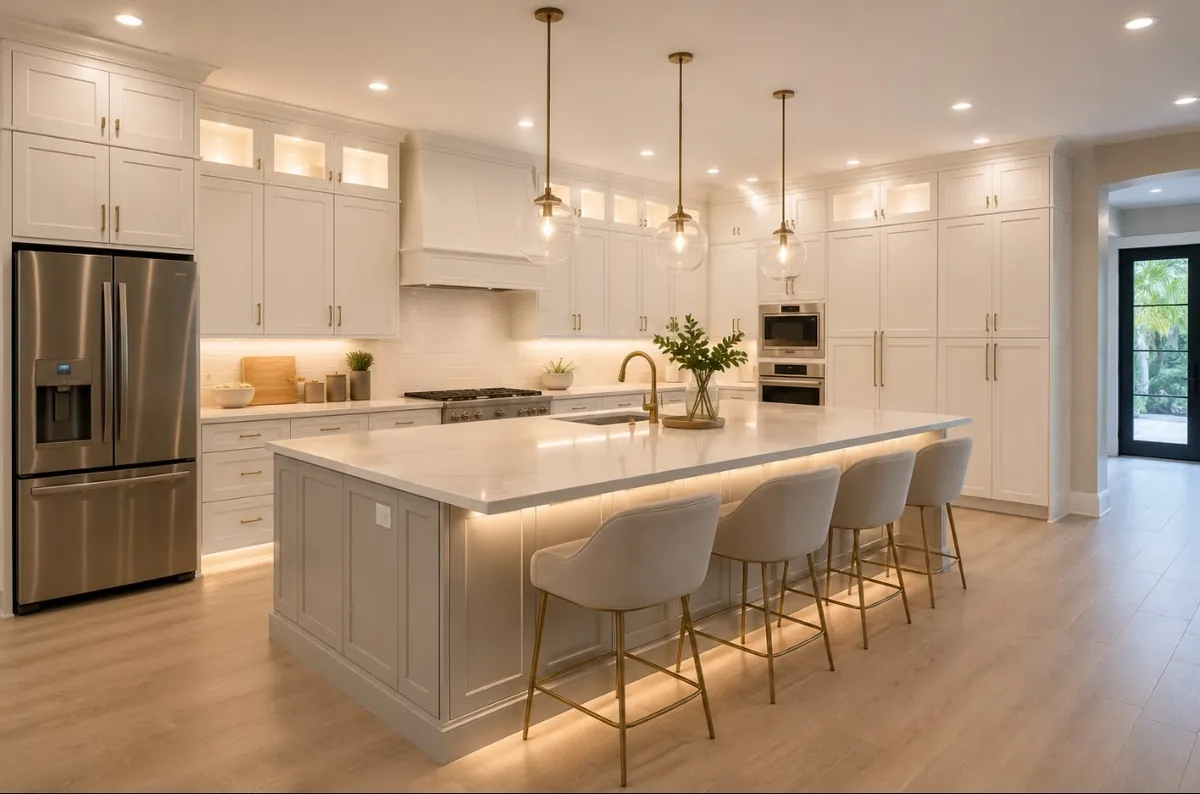
Why Lighthouse Point homes need systems built for the water
Lighthouse Point is small and almost entirely single-family, and most of those homes back onto a canal or open water. The air is salty, the humidity off the water is constant, and outdoor equipment sits closer to the elements than it would a few miles inland.
The homes themselves tend to have higher-end fixtures and systems than most of the county: more than one air conditioning system, variable-speed equipment, zoned ducts and connected controls are all common. Replacing that kind of setup is less about the cheapest box that fits and more about matching what the house already has, or improving on it, while choosing outdoor equipment that will stand up to salt for as long as possible.
AC installation in Lighthouse Point: what it can cover
Variable-speed systems
Equipment that runs at low speed most of the time for even temperatures, quieter operation and better moisture removal.
Multiple systems and zoning
Separate systems for floors or wings, or one system with dampers that cool each zone to its own setting.
Humidity control
Whole-home dehumidification and settings that keep a house by the water dry without overcooling it.
Salt-resistant outdoor units
Coated coils, coastal-rated cabinets and placement that limits salt and spray.
Air handlers and ducts
Indoor units matched to the outdoor equipment, and ducts checked or redesigned to carry the air properly.
Permits and elevation
The permit, the inspection and any flood-zone height rules for the equipment.
Salt on the canal side
Salt reaches every outdoor unit in a waterfront neighbourhood, but the side of the house facing the water usually gets the worst of it. Spray and mist off the canal settle on the condenser coil, hold moisture against the thin fins and slowly corrode them. Cabinet panels and wiring terminals go the same way.
As the coil corrodes it sheds heat less and less well, and a coil that has started leaking is rarely worth fixing. So a system by the water can be finished while the same model on a street away from the coast keeps running. Before choosing a replacement, raise these points:
- Factory-coated coils, or a protective treatment put on before the unit goes out
- Cabinets finished for marine air, with hardware that will not rust away
- The landward side of the house for the units, if the layout gives you the choice
- A platform that lifts them clear of splash and puddles
- What the manufacturer’s warranty says about equipment within sight of salt water
Variable-speed and staged equipment
A basic air conditioner has two settings: on and off. A staged system has two levels, and a variable-speed system can run at many points in between. Running slowly for long periods gives more even temperatures from room to room, removes more moisture and makes far less noise.
In a house with large open rooms, high ceilings and a lot of glass, that steady operation is noticeable. It also matters outside, where a variable-speed condenser running at low speed is much quieter beside a pool deck or a dock. If the house has variable-speed equipment now, the contractor will usually recommend the same. If it does not, ask them to explain what you would gain.
Zoning and more than one system
Larger homes are often cooled by two or more systems, typically one for each floor or each wing, because a single system struggles to serve rooms with very different sun and use. Some homes instead use one larger system with motorised dampers in the ducts and a thermostat for each zone.
When one system is due for replacement, it is a good time to look at all of them. The contractor can tell you the age and condition of each, whether replacing them together makes sense, and whether the zoning still matches the way you use the house. A guest wing that is closed most of the year, for example, may be better on its own zone.
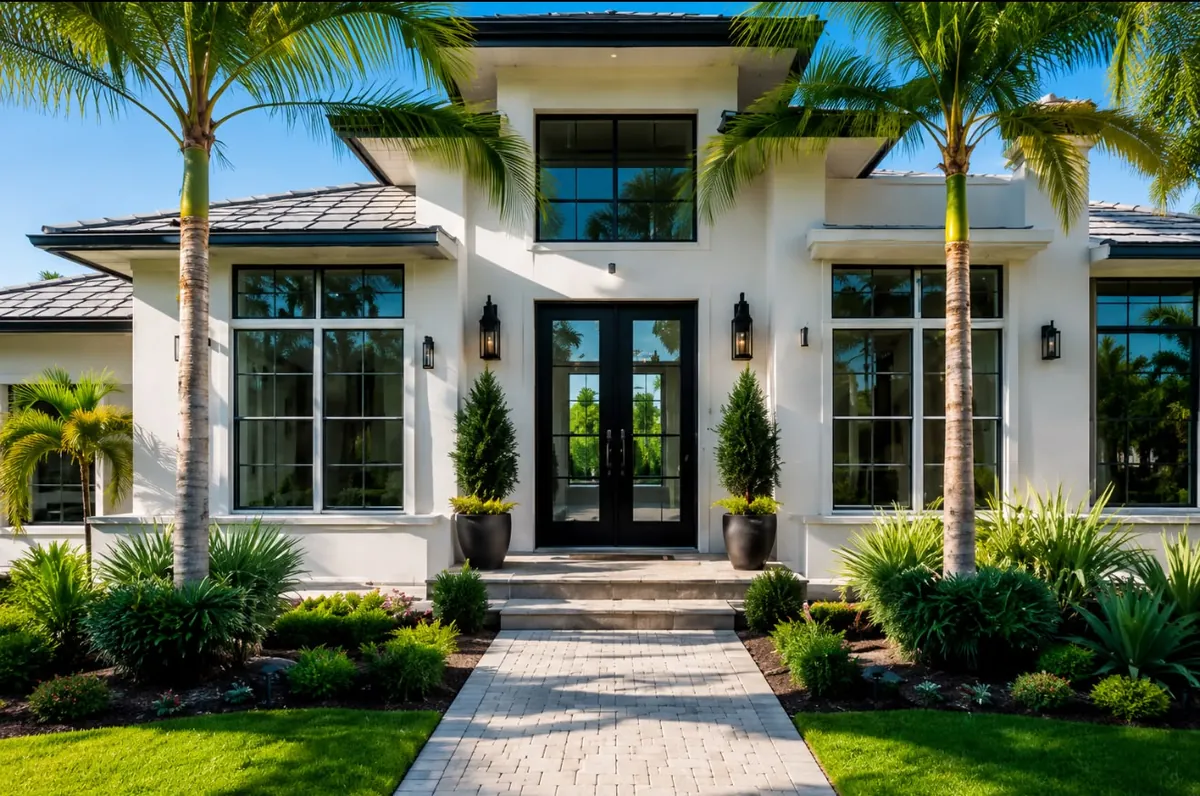
A house by the water, and the humidity that comes with it
Air off the canal is heavy with moisture, and a house beside it takes on that moisture through every door, window and gap. An air conditioner removes water from the air as it cools, but only while it is running long enough. In a tightly built, well-insulated house, there are times when the temperature is satisfied and the air is still damp.
There are several answers. A variable-speed system removes more moisture on its own. Many thermostats have a dehumidify setting that slows the blower. A dedicated whole-home dehumidifier, connected to the ducts, controls moisture separately from the temperature. The installer can say which fits your house, especially if you are away for long periods and want the house kept dry while it is empty.
Where the outdoor units should sit
The obvious place for the outdoor units is often the old place, but a replacement is a chance to think again. On a waterfront lot, consider:
- The flood zone. Many lots near the water are in one, and the rules can require outdoor equipment to be set above a certain height. Your installer confirms what your lot requires.
- Salt and spray, as above.
- Noise near the pool, the dock, the outdoor kitchen and the bedrooms.
- How the units look from the water and from the street, and whether a screen or enclosure would help, as long as it leaves enough air around them.
- Service access that does not mean climbing through planting or across the pool deck.
When replacement beats another repair
Premium equipment is dearer to fix, and some parts, especially the control boards and motors on variable-speed systems, are specialised. Replacement is worth a serious look when:
- The outdoor coil is corroded or leaking
- The same system has needed several significant repairs in recent seasons
- A major part fails on equipment that is already old
- The system uses a refrigerant that is no longer made
- Comfort has slipped: rooms run warm, the house feels humid or the system runs constantly
You get an honest read of the equipment and the options, and you make the call.
Sizing a waterfront home
A proper load calculation tells you how much cooling each zone of the house really needs. In a waterfront home, the windows often dominate: walls of glass facing the water, sliding doors to the terrace, and sun reflected off the water into rooms that would otherwise be shaded. A room with a big view can need far more cooling than its floor area suggests.
It takes in the square footage, the insulation, ceiling heights, every window and which way it faces, and what each zone is used for. Oversizing is a common mistake with large houses, and it leaves the air damp. Ask how the capacity was worked out for each system in the quote.
Air handlers and ductwork
In a two-storey home, the upstairs air handler often sits in the attic, where it is hot, cramped and hard to reach, and a drain problem can end up as a brown mark on the ceiling beneath it. The downstairs unit may be in a garage or a mechanical closet. Every indoor unit should be paired with its own condenser and sit over a pan, with a float switch that cuts the power if the condensate cannot drain.
Ducts in a larger home are long and branched, and they are only as good as their design and their sealing. Have the ducts for each system inspected, and to tell you whether any rooms are starved of air or whether the returns are too small.
Controls and connected thermostats
Many homes here already have connected thermostats or a home automation system. A new system needs controls that work with it, and variable-speed equipment often comes with its own communicating thermostat that gets the most from it. Ask the contractor whether your existing controls can stay, and what you would gain from the manufacturer’s own.
If you are away for part of the year, a connected thermostat with humidity readings lets you check on the house from wherever you are. Ask to have it set up and shown to you before the contractor leaves.
Equipment for a guest wing, cabana or bonus room
Waterfront homes are often extended over the years, and the newer parts are not always well served by the original system. A guest wing, a bonus room over the garage or a pool cabana may run warm, or may never have had proper cooling at all.
A replacement is a good time to sort that out. Depending on the space, the answer may be an extension of the existing ducts, a separate small system, or a ductless unit with a quiet indoor head on the wall. Ductless equipment suits rooms that are used now and then, because it cools only that space and needs no ductwork through finished ceilings. Ask the installer to look at any room that has never been comfortable while they are on the property, so the plan covers the whole house.
Doing the work while you are away
Some homes here are empty for part of the year, and a replacement can often be done while you are elsewhere. Tell One Call who holds a key or the alarm code, or who will meet the installer, and how you want to be kept informed. The quote can be sent to you to approve in writing, and progress and the finished installation can be shared with you as photos.
Arrange for someone to check the house the day after the work, to confirm the system is running and the drains are clear. For AC installation in Lighthouse Point while you are out of town, a connected thermostat set up on the day lets you watch the temperature and humidity from wherever you are.
How One Call arranges it
Tell us about the house first: how many systems there are, where they sit, how old they are, and what is prompting the change. If you know the make and model of the current equipment, that helps.
From that, One Call picks a vetted HVAC professional with the licence and insurance for installations and real experience of multi-system homes and premium equipment by the water. On site, they go through every system, the duct layout, the controls and where the outdoor units stand, then put their recommendation in writing, often as a choice of options. Say yes, and the permit goes in under their licence and a date is set. One Call remains the one number you need from start to finish. Where a neighbourhood association wants paperwork, we send over the pro’s insurance certificate and the approval forms.
You pay One Call, and One Call pays the pro. Read through what the price covers before anything is ordered: the equipment for every system, coil protection, platforms, zoning parts, controls, duct changes, the permit and hauling the old units away. If spreading the cost would help, financing is available; raise it when you call.
Permits and inspection
Florida treats a central air replacement as permitted work, and the application is made by the licensed installer. Once the new equipment runs, the inspector looks at the wiring, the tie-downs that hold each condenser through a storm and, on a flood-zone lot, the height the equipment was set at.
File the permit, the signed-off inspection and the model numbers somewhere safe. Anyone insuring or buying a home on the water is likely to want them.
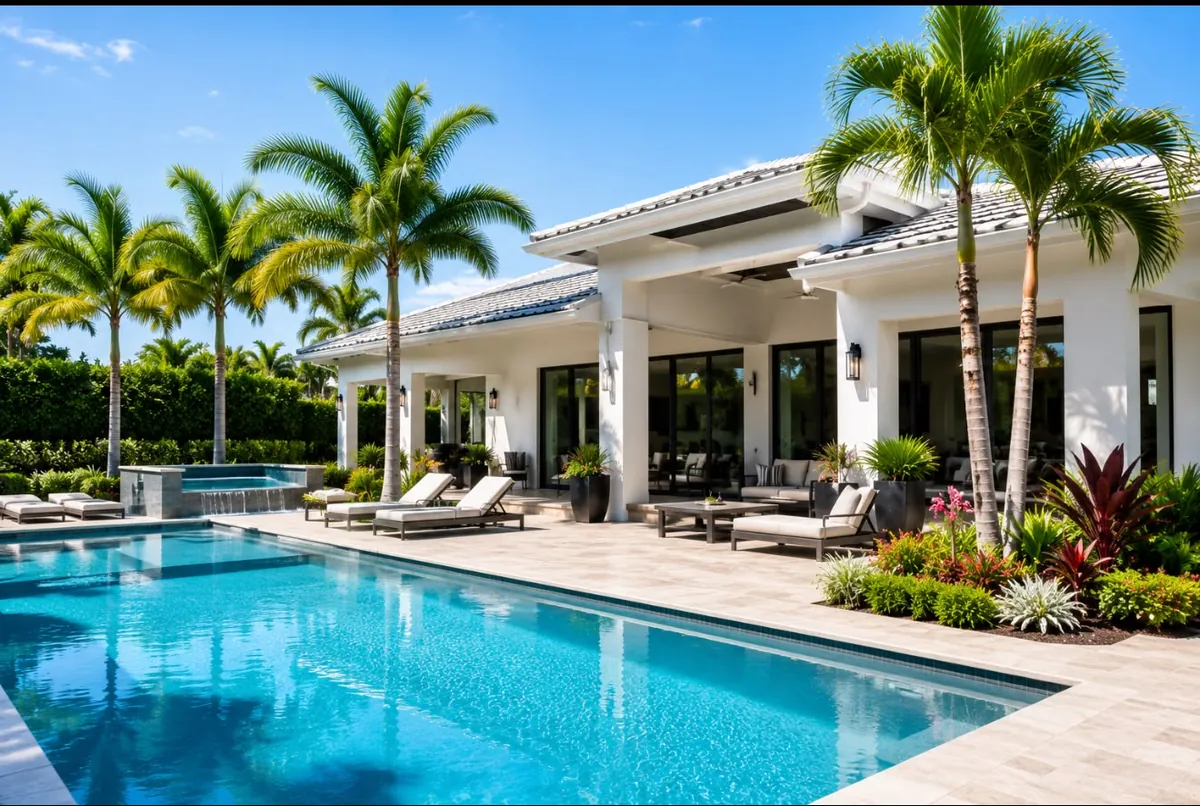
Install day in a finished home
A higher-end home usually has finishes, landscaping and outdoor spaces worth protecting. Before the day, agree with the contractor where the truck will park, the route for the equipment to and from the outdoor units and the attic, and how floors, stairs and planting will be protected.
When work begins, the old systems are shut down and their refrigerant reclaimed before anything is unbolted. New condensers go onto their platforms and are tied down, new air handlers go in, and the line sets, wiring, drains and controls are hooked up. Every system is leak-tested, pulled into a vacuum, charged and brought on, then the air at each room’s registers is checked. With more than one system, the contractor may replace them on different days so the house is never without cooling altogether.
At the end, have the installer walk you through the controls, the filter for each system and its change schedule, and the drain cut-off switches.
Before a storm, and after one
A waterfront home takes the full force of a passing storm, and the outdoor units are the most exposed part of the cooling. Once the new equipment is strapped down, there is not much to do beforehand except clear loose furniture, planters and boat gear from around the units so nothing is thrown against them.
Afterwards, look before you switch back on. If the units were splashed by salt water, sat in standing water or were hit by debris, have them checked before they run. Water in the electrical parts can do more harm once the power is back. Planning AC installation in Lighthouse Point with the units raised and on the sheltered side of the house makes this simpler every season.
Looking after equipment by the water
Between service visits, rinsing the condenser coils gently with fresh water, on the schedule the installer suggests, keeps salt from piling up. Each tune-up ought to cover the fins, the cabinet panels and the wiring terminals, where corrosion shows first, and the condensate lines, above all the one from an attic unit. Keep the area around the units clear of plants and stored items so they can breathe.
If something is not right after the job, ring One Call and we raise it with the installer for you.
Questions from Lighthouse Point
My home has two systems but only one has failed. Should I replace both?
Not necessarily. The contractor looks at both and tells you the condition of each. If the other is of a similar age, replacing them together may make sense.
Is a variable-speed system worth it in a house on the water?
It often helps with humidity and noise as well as comfort. Ask the contractor to explain the difference for your house.
Do the outdoor units need to be raised?
It depends on the property and the flood zone. The contractor checks what applies and plans the height and the platform.
We are away for the summer. Can the work happen while we are gone?
Often, yes. Tell One Call who will let the installer in, and you get the quote, the updates and photos of the finished work without being there.
Start with one call
Give us a picture of the house and how it is cooled today, and One Call sets up a visit from a vetted, licensed HVAC professional for AC installation in Lighthouse Point. Up and down the shoreline, you can also read about AC installation in Deerfield Beach and AC installation in Pompano Beach.