
Start by finding out how much of the house is affected. If one zone is warm and the others are fine, the fault is probably in that zone’s damper, thermostat or air handler; if the whole house is warm, look at the outdoor equipment and the breakers first. Write down any error code the thermostat or the outdoor unit is showing. Then call One Call Home Pros, and AC repair in Lighthouse Point is arranged from there. One Call is not an HVAC contractor. It finds a vetted, licensed, insured local professional who knows your type of system, books the visit around your schedule, and keeps the job in hand until every zone is cooling.

Why Lighthouse Point homes need AC repair suited to salt water and premium equipment
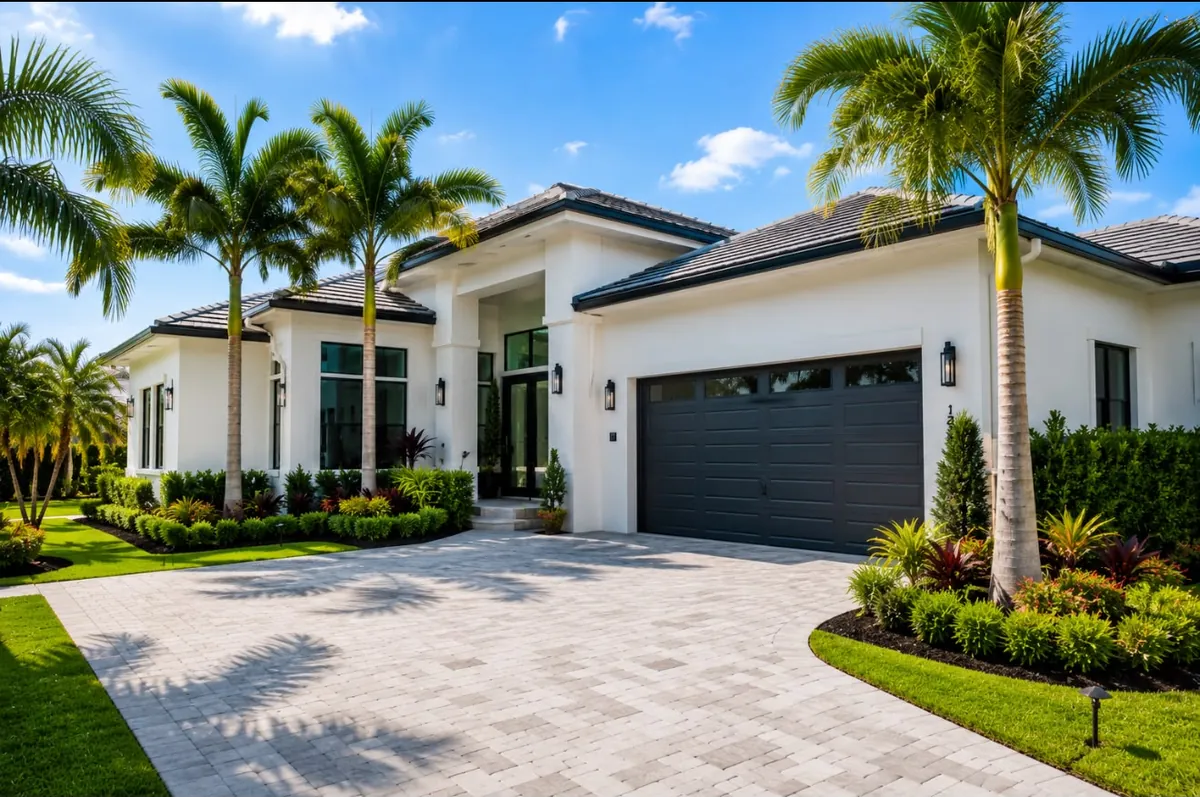
Lighthouse Point is small and almost entirely single-family, and nearly every street backs onto a canal or the Intracoastal. Homes sit beside docks and boat lifts, with salt water a few steps from the outdoor equipment. Salt air reaches every coil, fan and electrical terminal on the property, and it works on them every day of the year.
The systems inside these homes are often more advanced than the county norm. Variable-speed compressors, multi-stage air handlers, zoned ductwork with motorised dampers, communicating thermostats, whole-house dehumidifiers and more than one system per house are all common. They cool more evenly and run more quietly than a basic single-stage unit, but they also have more sensors, more boards and more ways to report a fault.
A repair here needs a pro who is comfortable with that equipment and who expects salt damage as a matter of course. One Call asks about both on the first call, so the person who arrives has worked on systems like yours.
AC repair in Lighthouse Point: what pros are called out for
Salt damage at the condenser
Fins eaten away along the edges, green terminals, rusted cabinet screws and fan motors seized by corrosion. The unit runs and cannot reject heat.
Variable-speed and inverter faults
Error codes, a compressor that ramps up and stops, or a system that runs at low speed and never catches up. Usually a sensor, a board or a refrigerant issue.
Zoning problems
One zone too cold, another warm. A stuck damper, a failed zone thermostat or a zone control board that has lost track of the calls.
Refrigerant leaks
Pinholes in corroded coils and joints. Advanced systems are sensitive to the exact charge, so the leak is found before anything is added.
Condensate and dehumidifier drains
Overflowing pans, float switches that have shut the system off, and dehumidifier drains that have clogged with slime.
Thermostats and controls
Communicating thermostats that show codes or lose contact with the equipment, and smart controls that stop responding.
Salt water on three sides
Few places in the county put an air conditioner as close to salt water as a canal lot does. The breeze off the water carries fine salt spray, and it settles on the outdoor coil, the fan guard and the electrical compartment. With humidity, salt draws moisture onto the metal and keeps it there.
The damage comes in a recognisable order. First, the thin coil fins corrode along their edges and start to flake. Then the joints between fins and tubes loosen, and the coil stops moving heat well. Electrical terminals turn green and loosen, causing intermittent faults. Fan motor bearings and cabinet fasteners rust. Eventually, refrigerant tubing itself develops pinholes.
You can slow it:
- Rinse the outdoor coil gently with fresh water from a hose, with the power off, after windy spells and every few weeks in the drier months
- Keep the spray gentle; a pressure washer folds the fins flat
- Ask the pro whether your coil has a protective coating, and whether it needs attention
- Keep boat wash-down hoses and dock cleaning spray away from the units
When salt damage is the cause of a failure, the pro will tell you how far it has gone and whether a repair is sensible on that coil.
Multi-stage and variable-speed systems
Many homes here run equipment that can change speed rather than simply switching on and off. A variable-speed compressor slows down to match a light load and speeds up on a hot afternoon. A variable-speed blower adjusts airflow to match. The result is steady temperatures, lower humidity and quieter running.
When these systems fail, the symptoms are less obvious than on a basic unit. Instead of a dead outdoor unit, you may see:
- An error code on the thermostat or a flashing light on the outdoor board
- A system that runs all day at low speed and never reaches the set point
- A compressor that ramps up, stops, waits and tries again
- Humidity creeping up even though the house is cool
These systems rely on sensors and control boards, and a fault in one can look like a failure somewhere else. A pro who works on this equipment reads the codes and the system’s own diagnostics before replacing anything. Note any code you see and the make of your system; it helps One Call match the right pro.
Zoned homes and stuck dampers
Large homes are often zoned: one system feeds several areas, with motorised dampers in the ducts opening and closing as each zone’s thermostat calls. Others have two or three separate systems, one per floor or wing.
When one area is warm and the rest are fine, the problem is often in the zoning rather than the main equipment. A damper motor fails and leaves its damper shut. A zone thermostat loses power or its connection to the control board. The board itself fails and stops passing calls to the equipment.
To help the pro:
- Note which zones or rooms are affected and which are fine
- Check each zone’s thermostat: mode, set point and display
- If the house has more than one system, say which one serves the warm area
- Mention any recent work on ducts, ceilings or the attic, which can disturb dampers and wiring
How One Call handles the job
Air conditioning work in Florida is done under the contractor’s licence, and that licence is never One Call’s. One Call’s role is to choose a vetted, licensed, insured HVAC professional who works on your type of system, arrange the visit, and keep track of the job until it is finished.
On site, the pro diagnoses the fault and explains it. Nothing is repaired until you approve it. One Call bills you for the job and pays the professional itself, so there is a single invoice and one place to raise any question. Ask what the price covers, including the diagnosis, before work starts. For a larger repair on an advanced system, financing is available; ask about it when you call.
Equipment raised above flood level
On a waterfront lot, outdoor units are often set on raised platforms or stands to keep them above storm surge and high tides. That protects them from water, but it puts them in the full wind and spray, and it can make them harder to reach.
Before the visit, check:
- Whether the platform needs a ladder, and whether the pro can reach the units safely
- Whether anything is stored on or under the platform that blocks access
- Whether the units are bolted down securely; loose mounts let them vibrate and wear
- Whether any wiring or refrigerant lines along the stand look damaged
If storm water has reached any part of the equipment, do not run it. Tell One Call, and the pro will check the electrical parts before the system is switched back on.
Dehumidifiers and air quality add-ons
Some homes here have a whole-house dehumidifier, UV lamps in the air handler, upgraded filtration or fresh-air ventilation tied into the AC. Each of these adds parts that can fail, and some can make it look as though the AC itself is the problem.
A dehumidifier with a clogged drain can shut down or overflow. A UV lamp that has burned out does nothing visible, but an air handler with a failed lamp can grow mould on the coil again. A thick media filter that has clogged starves the blower of air, just like a dirty standard filter. Fresh-air dampers that stick open bring humid outdoor air straight into the system.
Tell the pro what add-ons your system has. They will check them as part of the visit.
Condensate in a large home
Bigger homes with more than one air handler have more than one condensate line, and each one needs to drain freely. In two-storey homes, an upstairs air handler with a clogged line can send water through a ceiling below. Attic units usually have a secondary pan and a float switch to catch overflow, but a switch that trips leaves that zone with no cooling.
If one zone stops and you find water in its pan, the drain line is the likely cause. Turn that system off and call. Mention which air handler it is and where it sits in the house.

Docks, lifts and the electrical panel
On a canal lot, the AC often shares the home’s electrical service with a boat lift, dock lighting, shore power, a pool pump and landscape lighting. When a heavy load such as a lift motor starts at the same moment as a compressor, the voltage dips, and a weak capacitor or a tired contactor may not cope.
Lightning over open water is another hazard. A strike nearby can send a surge through the service and damage the control boards that variable-speed systems depend on. A system that went quiet after a storm, or now shows a code it never showed before, may have a damaged board rather than a mechanical fault.
Mention to the pro if the AC trips or misbehaves when other equipment is running, or if the trouble began after a storm. If the cause turns out to be the home’s wiring or the panel, the pro will say so, because that is work for a licensed electrician.
Guest suites, cabanas and ductless heads
Some properties here have spaces that the main system does not reach: a pool cabana, a converted garage, a guest suite over the garage or a dockside room. These are often cooled by a ductless mini-split, with a slim head on the wall and a small outdoor unit nearby.
Ductless systems are part of AC repair in Lighthouse Point more often than in neighbourhoods without outbuildings. Their usual faults are a drain that drips down the wall, a head that blinks an error light, a remote that has lost its pairing, or a filter behind the front panel that has clogged with dust and pollen. Their small outdoor units sit just as close to salt water as the main condenser, and they corrode the same way.
When you call, say whether the problem is in the main house or in a space served by its own unit. If several units need attention, one visit can often cover them.
Listen to the system
Plenty of calls for AC repair in Lighthouse Point begin with a sound rather than a temperature. Variable-speed equipment is designed to be quiet, so a new noise stands out:
- A rattle from the outdoor cabinet, often a loose panel or a fan blade hitting something
- A high whistle at the indoor unit, which can point to a restricted filter or a closed damper
- A buzz at the outdoor unit that does not lead to a start, typical of a failing capacitor or contactor
- A grinding or squeal from a fan motor whose bearings are going
If you hear something new, note when it happens: at start-up, while running or as the system shuts down. That detail narrows the search before the pro has opened a panel.
Systems that run while you are away
Many homes here are left for weeks at a time, whether for travel or a season elsewhere. A system that is set to hold a humidity level while the house is empty still has to run, and a fault while nobody is home can go unnoticed until the house is hot and damp.
If your thermostat sends alerts to your phone, keep them switched on. If you have a house manager or a neighbour who checks the property, make sure they know where the thermostats are and what normal looks like. If a fault arises while you are away, One Call can arrange the repair with whoever has access, and keep you informed.
When a storm is on the way
Waterfront equipment takes the worst of a hurricane or a tropical storm. Before one arrives, clear loose items from around and on top of the outdoor units, check that the units are secured to their stands, and consider switching the AC off at the breaker once the power starts to flicker. After the storm, look for debris lodged in the fins, bent fan guards and water marks on the equipment before you turn anything back on. If the units were splashed or flooded with salt water, leave them off and tell One Call; the pro needs to check the electrics before the system restarts.
The order of a repair visit
- The pro checks in with you or with whoever has access, and confirms which systems and zones are affected.
- They read any codes from the thermostat and the outdoor unit, and check the system’s own diagnostics.
- Indoors, they look at the filter, the blower, the coil, the drain and any add-ons.
- Outside, they inspect the coil for salt damage and test the electrical parts, the fan and the compressor.
- If needed, they check the refrigerant charge and look for a leak.
- They explain the fault and the repair, and work begins once you agree.
- Afterwards, they run every affected zone and confirm cool air and a draining condensate line.
When a part has to be ordered, especially for a less common system, the pro tells you and One Call schedules the return.
Details that help the first call
For AC repair in Lighthouse Point, these details let One Call match the right pro:
- The make and model of each affected system, ideally a photo of the outdoor label
- Any error code or service alert on the thermostat
- Which zones or floors are affected
- Where the outdoor units are, and whether they are raised or hard to reach
- Who will give the pro access, if you are not home
Up the coast, One Call arranges the same work in Deerfield Beach, and to the south in Pompano Beach. The Coral Springs AC repair page covers the common faults in general terms.
Questions from Lighthouse Point
My thermostat is showing an error code. Should I reset the system?
Note the code first, then try one reset at the thermostat. If the code returns, leave it and call. The code tells the pro where to start, and repeated resets can hide an intermittent fault.
One zone upstairs is warm but the rest of the house is fine. What is wrong?
Often a stuck zone damper, a failed zone thermostat or a clogged drain on that floor’s air handler. Tell One Call which zone it is and whether a separate system serves it.
The fins on my outdoor unit are flaking. Is that the salt?
On a canal lot, almost certainly. Salt corrodes the fins over time. Rinse the coil gently with fresh water, and ask the pro how much life the coil has left.
I am away for several weeks. Can One Call arrange a repair while I am gone?
Yes. Give us the details of whoever has access to the house, and we arrange the visit with them and keep you informed about what the pro found.
Arrange the repair
Note which zones are affected and any code on the screen, then tell One Call. A vetted, licensed local HVAC professional who works on systems like yours is booked, and One Call keeps the job moving until the whole house is cool.